


Psychedelic-assisted therapy shows powerful mental-health benefits, even for people who haven’t responded to traditional treatments. Ketamine therapy already offers a pathway to this type of treatment, and substances like psilocybin and MDMA may also soon see FDA approval, as research continues to grow.
While there’s lots of promise to psychedelic therapy, financial access remains a concern. As this treatment moves closer to mainstream practice, people are wondering whether it will be affordable and whether insurance will cover it.
In this article, we’ll explore the trajectory of psychedelic therapies, what insurance backing is already available, and what we might expect for the future.
Key Takeaways
- Psilocybin therapy is legal only in certain state programs like Oregon, and remains federally illegal, so insurance rarely covers it.
- MDMA therapy remains illegal outside of research, and insurance does not cover it.
- Ketamine is legal for medical use, and there are some insurance coverage options.
- Spravato has FDA approval for TRD and MDSI, and many insurance plans cover it within a supervised medical setting.
- Future insurance coverage depends on federal approval of psychedelic treatments.
What Is Psychedelic Therapy?
Psychedelic therapy uses psychedelic substances along with guided talk therapy. These drugs change how you think, feel, and perceive things and include classical psychedelics like LSD and psilocybin (the active compound in magic mushrooms), and non-classical psychedelics, like MDMA and ketamine.
While each substance has a unique mechanism of action in the brain and produces distinct effects, they all have the capacity to support psychotherapy. When used intentionally, psychedelics could help you shift away from negative thought patterns, gain insights into your life, and facilitate emotional release.
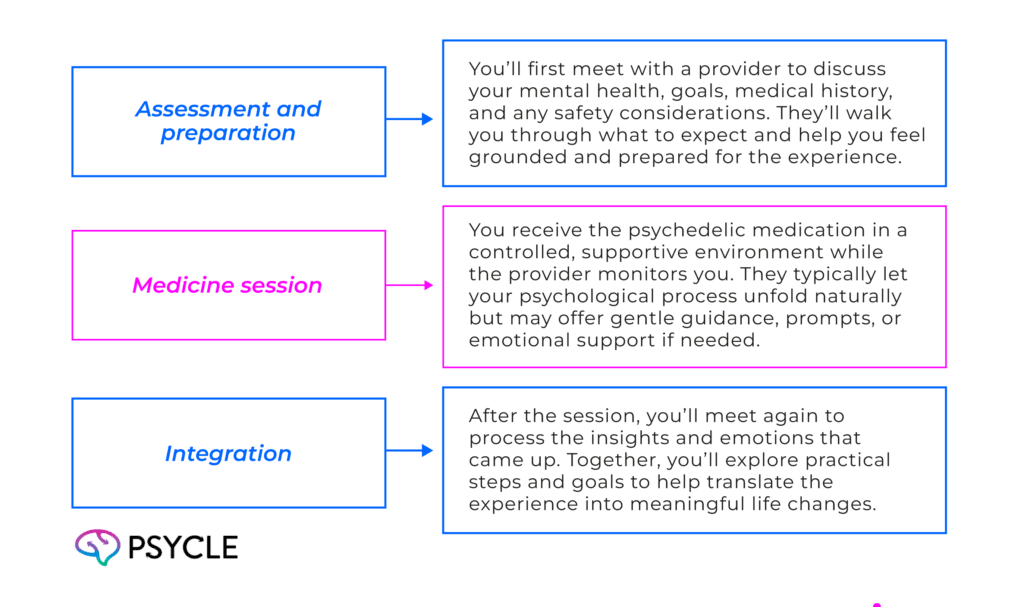
Clinics and research facilities follow a broad model of psychedelic therapy:
Insurance Coverage for Psychedelic Therapy: An Overview
Insurance companies look at several factors before they cover a treatment, including:
- Federal legality
- State legality
- FDA approval
- Clear medical use shown in large studies
- Professional guidelines
Most psychedelic substances are scheduled compounds. They aren’t approved for use in mental health care, and so most insurance companies don’t cover them. However, a few exceptions exist.
Psilocybin Therapy and Insurance
What Is Psilocybin?
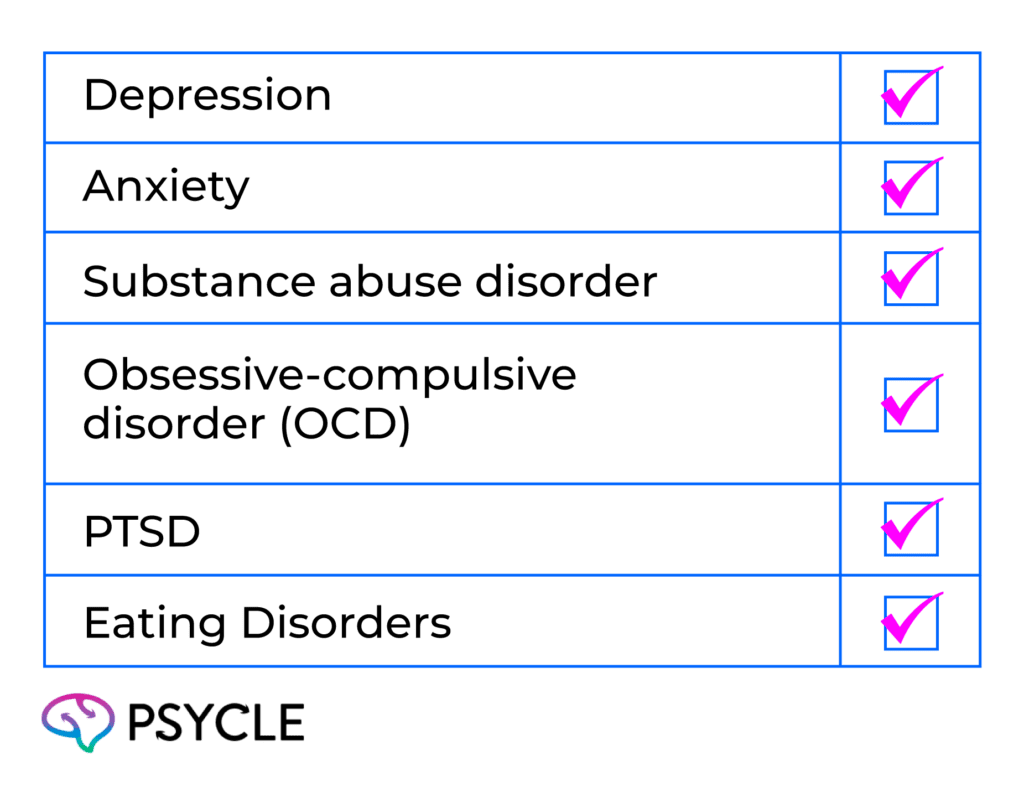
Psilocybin is one of the most widely studied substances in psychedelic medicines. It increases neuroplasticity, the brain’s ability to regrow and form neural pathways, and shows benefits for several mental health disorders, including:
Legality of Psilocybin Therapy
Oregon created the first legal psilocybin service model in the United States. The state allows adults 21 and older to use psilocybin at approved service centers under the supervision of trained facilitators. Colorado also allows adults to take natural psychedelics, including magic mushrooms, in licensed “healing centres.” In both states, treatments don’t require a clinical diagnosis, and they aren’t the same as medical treatment.
Even with these state programs in place, however, psilocybin remains a Schedule I substance at the federal level. That means the federal government says it has no accepted medical use. As such, insurance companies do not typically cover psilocybin therapy.
Insurance Exceptions
A center in Bend, Oregon, recently made news when it became the first psilocybin service center in the state to accept insurance payments for part of its services. The centre will accept insurance through Enthea, the only licensed benefits provider offering coverage for psychedelic mental health treatments.
Clinical Trials as a Lower-Cost Option
As psilocybin therapy is mostly illegal in the US, entering a clinical trial is one of the main pathways to access. Trials often use grant funding or sponsor funding, meaning you don’t need to pay for the treatment. However, clinical trials have strict rules. You must meet the study’s criteria, show up for all sessions, and follow instructions.
MDMA Therapy and Insurance
What Is MDMA?
MDMA is a synthetic compound that increases feelings of trust, empathy, and emotional openness. It acts differently from classical psychedelics like LSD and psilocybin, but can provide the same benefits in mental health treatment.
As MDMA reduces activation in the brain’s “fear centre,” it’s mostly been studied for the treatment of PTSD. Numerous clinical trials show powerful benefits for overcoming trauma-related symptoms.
Current Access and Legality
MDMA remains a Schedule I substance under federal law. That means it is illegal outside of research settings.
Although MDMA therapy moved close to FDA approval in earlier reviews, federal drug regulators have not approved it for standard medical use as of 2025. Because MDMA does not have FDA approval, insurance companies do not cover MDMA-assisted therapy today.
If MDMA receives FDA approval in the future, insurance companies may review it for coverage.
Financial Access Through Research
Like with psilocybin, research studies allow people to receive MDMA-assisted therapy at no cost. This path may help people who cannot afford treatment on their own.
Ketamine Therapy and Insurance
What Is Ketamine Therapy?
Ketamine is a legal anesthetic that doctors have used for decades. At lower doses, ketamine creates changes in mood and perception and can rapidly alleviate symptoms of mental health disorders. While ketamine has psychiatric benefits on its own, it can also be used in a model of psychedelic-assisted therapy to support long-lasting change.
Clinics use ketamine to treat many psychiatric disorders, including:
- Depression
- Anxiety
- Substance abuse disorder
- Obsessive-compulsive stress disorder (OCD)
- PTSD
- Eating disorders
Legality and Availability
Ketamine is legal for medical use in all U.S. states. Since it is an approved medication, doctors can prescribe it off-label to treat mental health disorders. This means that even though ketamine is not formally approved for psychiatric conditions, there is strong evidence to support this use.
Insurance Coverage for Ketamine Therapy
Insurance coverage is limited and inconsistent when it comes to ketamine use for mental health treatment. Most commercial insurers, as well as Medicare and Medicaid in many states, typically classify off-label ketamine as investigational for psychiatric care, which makes reimbursement difficult.
Out-of-pocket, ketamine therapy typically costs around $400 to $800 for a single infusion. However, some clinics provide coded invoices or “superbills” that patients can submit to their insurers in hopes of partial reimbursement. This could include the cost of the medication, administration fees, or follow-up supportive care.
Coverage, when it occurs, usually depends on several factors: the clinic’s billing codes, documentation showing medical necessity (such as failure of other treatments), whether the clinic is in-network with the patient’s insurance, and the insurer’s willingness to consider appeals.
Alternative Financial Support for Ketamine Therapy
Because insurance coverage for ketamine therapy is typically limited, you can consider alternative options such as Health Savings Accounts (HSAs) and Flexible Spending Accounts (FSAs).
These allow you to set aside pre-tax dollars for medically necessary treatments, including ketamine infusions, provided they are properly documented. Some clinics also offer payment plans, sliding-scale fees, or membership packages that reduce the per-session cost for patients committing to a full course of treatment.
Spravato: The Insurance-Backed Option for Psychedelic Therapy
Spravato is a nasal spray containing esketamine, a compound derived from ketamine that has similar neurological effects. The FDA approved it for two conditions:
- Treatment-resistant depression (TRD)
- Major depressive disorder with suicidal thoughts or behavior (MDSI)
Is Spravato a Psychedelic?
Spravato treatment works in a highly controlled medical structure. You visit a certified clinic, receive the nasal spray under supervision, and stay for monitoring.
This model does not match the psychedelic-assisted therapy model. However, Spravato’s effects can still be psychoactive, changing perspectives and leading to valuable insights. Some people report that notable memories and emotions arise during their Spravato experiences.
You may choose to have psychotherapy in addition to Spravato treatment. Professional support can help you process any psychological changes associated with Spravato and increase the likelihood of long-lasting change.
Is Spravato Covered by Insurance?
Because Spravato has FDA approval, insurance companies often cover it. However, coverage depends on your plan and diagnosis. Many plans require proof that other treatments did not work before they approve Spravato.
The Future of Psychedelic-Assisted Therapy and Insurance Coverage
Psychedelic research has grown fast. Large universities and medical centers are now running trials, and lawmakers across states are discussing regulatory change.
If the FDA approves psilocybin or MDMA in future years, insurance companies may add coverage for therapy models connected to those approvals. FDA approval provides insurers with a clear framework for safety, dosing, and clinical guidelines. It also gives providers formal guidelines for administering medicines safely and effectively.
FAQs
How Much Does Psychedelic Therapy Cost?
Without insurance, psychedelic therapy can be costly. Ketamine treatment typically ranges from $400–$800 per infusion, with a standard 6-infusion series often totaling $2,400–$6,400. Psilocybin therapy in Oregon costs around $800 to $ 3,000 for a complete session, including preparation and integration.
Where Can I Legally Access Psychedelic Therapy?
Psychedelic therapy is legal only in a limited number of places worldwide: in the U.S., Oregon and Colorado have regulated adult-use psilocybin programs, while ketamine therapy is legally available nationwide because ketamine is an approved Schedule III medicine.
Outside the U.S., several countries allow some form of regulated psychedelic-assisted treatment. Australia permits psychiatrists to prescribe MDMA- and psilocybin-assisted therapy for specific conditions under a national therapeutic program, and Canada allows limited, case-by-case access through exemptions. Countries like the Netherlands, Jamaica, and Mexico host legal psilocybin or ayahuasca retreats due to local laws that either permit or do not criminalize these substances in supervised contexts.
Sources
- https://pmc.ncbi.nlm.nih.gov/articles/PMC6007659/
- https://pmc.ncbi.nlm.nih.gov/articles/PMC9879604/
- https://pubmed.ncbi.nlm.nih.gov/38362026/
- https://pmc.ncbi.nlm.nih.gov/articles/PMC8715255/