

MDMA, commonly known as ecstasy or Molly, triggers an intense release of serotonin in the brain, producing euphoria, empathy, and emotional closeness. However, this surge comes at a temporary cost: the brain’s natural balance is disrupted, typically resulting in a period of low mood and fatigue.
Understanding how long MDMA influences serotonin is vital not just for risk awareness but for planning recovery, whether for recreational users or in the context of therapeutic use. In this post, we examine the timeline of serotonin changes following MDMA, the mechanisms involved, factors that influence recovery, and strategies to support the brain during regeneration.
Key Takeaways
- MDMA produces a powerful but temporary surge in serotonin by reversing the function of the serotonin transporter.
- A comedown follows, driven by serotonin depletion, often lasting a few days.
- Complete recovery of SERT and serotonin production typically takes weeks to months, though timelines vary.
- High-dose or repeated use may increase the risk of longer-term adverse effects, but many of these remain reversible.
- Lifestyle strategies, including rest, nutrition, and exercise, support the brain’s healing.
- In clinical settings, MDMA may provide therapeutic benefits when used under guidance.
Serotonin Surges With MDMA
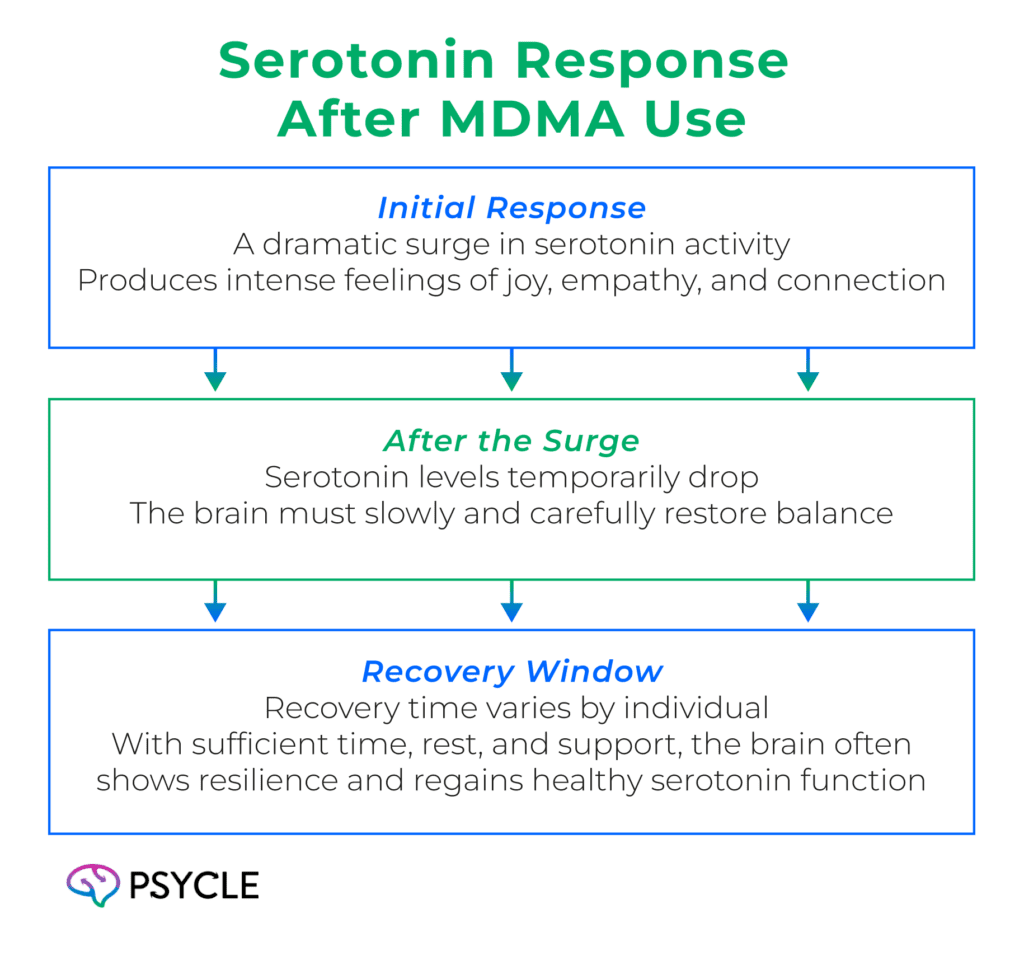
When MDMA enters the brain, it commandeers serotonin transporters (SERT), forcing them to reverse and flood the synapse with stored serotonin. This flood of serotonin significantly increases receptor activation, driving the hallmark feelings of warmth, empathy, and euphoria.
At the same time, MDMA weakly raises dopamine and norepinephrine, contributing to increased energy, alertness, and positive mood.
Typically, effects begin within 30–60 minutes of ingestion and peak between 2 and 4 hours, with the high gradually fading over a 6-hour window in many cases. While the immediate “magic” is powerful, the surge of serotonin sets off a chain reaction that the brain must correct after the drug wears off.
Short-Term Depletion: The Come-Down Phase
After the peak, the brain’s stores of serotonin run low. Transporters and receptors are temporarily overwhelmed or downregulated, making it difficult for neurons to recycle or produce serotonin at their usual rate.
This chemical dip often underlies the comedown that many users report: a mix of fatigue, irritability, sadness, anxiety, or even mild depression.
According to NIDA, these after‑effects commonly emerge as serotonin release slows, receptor activation drops, and signaling returns to a more sluggish baseline.
In the days that follow, many people describe “mid‑week blues”: mood swings, poor sleep, low motivation, and cognitive fog. Research suggests that this phase typically lasts between one and three days, although individual experiences vary.
Intermediate Recovery: Weeks to Months
Once the immediate depletion is resolved, the brain initiates a more gradual repair process. Animal research has shown that serotonin transporter (SERT) binding, which may drop significantly after MDMA exposure, can remain reduced for weeks or even months.
Structural and enzymatic changes may also occur: tryptophan hydroxylase, the enzyme required for serotonin synthesis, may remain suppressed for an extended period.
Clinical imaging studies offer a nuanced picture. Reviews of PET and SPECT data suggest that heavy MDMA users tend to have lower SERT availability in various brain regions. Yet many of these studies also show partial recovery after months of taking a break, indicating the brain retains a remarkable capacity for repair.
That said, recovery time is not uniform. Factors such as the dose taken, frequency of use, genetics, metabolic rate, and even age play a role in how fast and how fully, the brain recovers.
Long-Term Changes: Neurobiology and Risk
While many effects of MDMA are reversible, repeated or high-dose use carries a risk of longer-term changes. Animal studies suggest that prolonged exposure can damage serotonin axons or lead to the structural pruning of serotonergic pathways. In primate models, this damage may persist for months or even years.
In humans, the evidence is more mixed. Molecular imaging studies often show that heavy MDMA users have lower SERT binding compared to non-users. However, that reduction may not always indicate neuron death; down‑regulation (temporary reduction of transporter expression) might be part of the picture.
There is also concern about oxidative stress: the surge of serotonin can generate reactive oxygen species, which might contribute to long-term neuronal stress or damage. However, the brain’s plasticity gives reason for optimism; recovery, though sometimes incomplete, remains possible for many users.
Factors That Shape Recovery Speed
Several key variables influence how quickly serotonin function returns to baseline after MDMA use:
- Dose and Intensity of Use: Larger or more frequent doses deplete serotonin more deeply, extending recovery time.
- Frequency of Use: Spaced-out use gives neural systems more time to rebalance. Frequent re-dosing can increase risk.
- Environmental stressors: Heat, dehydration, and prolonged physical exertion (common in recreational use) can exacerbate serotonin depletion and strain transporters.
- Individual Biology: Genetic factors (such as variations in the SERT gene), metabolic rate, baseline serotonin levels, and age all affect recovery speed and capacity.
- Substance Purity: Impure or adulterated MDMA may place extra stress on the serotonin system. Ensuring purity, when possible, reduces the additional neurochemical burden.
- Supportive Lifestyle: Recovery benefits from sleep, nutrition, exercise, and mental-health care. Lifestyle choices that support neuroplasticity can accelerate the restoration process.
Restoring Serotonin: Supportive Strategies
If you or someone you care about is recovering from MDMA use, there are science-based strategies to help the brain heal:
- Allow Time and Rest: Prioritize sleep and recovery. Rest supports the brain in rebuilding its neurochemical balance.
- Optimize Your Nutrition: Tryptophan-rich foods, such as nuts, eggs, turkey, and bananas, help support serotonin synthesis.
- Keep Moving: Moderate aerobic activity stimulates neurotrophic factors and supports neuroplasticity, helping the brain rebuild neural connections.
- Use Mental-Health Tools: Therapy, mindfulness, or peer support can help manage mood shifts and reinforce long-term stability.
- Respect Recovery Intervals: Allow several weeks (or even months) to pass between sessions. Allowing the brain time to rest reduces the cumulative impact and supports a more complete recovery.
- Consider neurorehabilitation: Emerging interventions, such as transcranial neurostimulation (TNS), may help restore serotonin function. Some clinical teams view these tools as promising for recovery.
Therapeutic MDMA: Effects on Serotonin in Clinical Settings
Researchers are exploring MDMA for therapy, especially for PTSD, depression, and anxiety. In controlled clinical settings, doses are often lower, purity is assured, and sessions are spaced out, allowing for safer management of serotonin impact.
Because of the structured nature of therapy, recovery periods are built in, reducing the risks of long-term depletion. Some early studies suggest that, under supervision, serotonin function recovers well in most participants. Still, research continues: long-term monitoring is essential to ensure safety and understand neurobiological outcomes.
MDMA Therapy: Gains Can Outweigh the Dip
Though much of the conversation around MDMA and serotonin centers on risk, there is a more balanced perspective to consider. The brain’s ability to bounce back, thanks to neuroplasticity, is significant. Many users report that their mood stability returns after weeks or months, particularly if they support recovery with healthy habits.
Moreover, in therapeutic contexts, MDMA offers potential benefit by temporarily enhancing emotional openness, reducing fear, and facilitating trauma processing. For some individuals, these gains may outweigh temporary biochemical disruption, especially when supported by professional care and recovery planning.
Smart Use of MDMA Limits Harm
MDMA’s effect on serotonin is both dramatic and delicate: The initial surge in neurotransmitter activity brings intense joy, empathy, and connection, but it also triggers a temporary depletion that the brain must painstakingly repair. Recovery varies by individual, but the brain often shows remarkable resilience: given time, rest, and support, many users regain healthy serotonin function.
While risks exist, especially with repeated or heavy use, reducing harm is possible. Thoughtful spacing, attention to physical and mental health, and respect for the brain’s recovery processes can make a real difference. For those using MDMA in therapeutic contexts, structured dosing and professional care provide a safer path to benefit. In all cases, understanding how long MDMA affects serotonin empowers safer, more informed choices.
FAQs
Will Serotonin Function Fully Recover After MDMA Use?
Often, yes, but recovery depends on how much and how frequently MDMA was used, as well as individual biology. Imaging studies show partial or complete restoration of serotonin transporter binding in many users after months of abstinence.
How Long Should I Wait Before Using MDMA Again to Let Serotonin Recover?
There’s no one-size-fits-all answer. Based on research and expert opinion, waiting several weeks to months is advisable, especially for higher or more frequent doses of MDMA. This break allows the brain’s transporters and systems to rebalance.
Can Natural Lifestyle Changes Restore Serotonin After MDMA?
The brain restores its serotonin system. Some emerging therapies, such as neurostimulation, may further support recovery in clinical settings.
Sources
- https://www.nature.com/articles/1395809
- https://www.youtube.com/watch?v=FKakY7Svc9Y
- https://www.changegrowlive.org/advice-info/drugs/mdma
- https://www.sciencedirect.com/science/article/abs/pii/S0011502924001779
- https://www.newscientist.com/article/mg15420870-300-after-the-rave-the-ecstasy-hangover/
- https://www.imperial.ac.uk/news/140295/study-reveals-ecstasy-acts-brain-hints/
- https://nrslifespan.com/posts/the-power-of-resiliency-how-it-shapes-and-strengthens-the-brain/
- https://pmc.ncbi.nlm.nih.gov/articles/PMC9879604/
- https://maps.org/2010/06/29/accounts-of-mdmas-healing-effects-2/
- https://journals.sagepub.com/doi/10.1177/0269881107084738
- https://onlinelibrary.wiley.com/doi/10.1046/j.1471-4159.2003.02032.x
- https://www.nature.com/articles/s41591-021-01336-3
- https://pmc.ncbi.nlm.nih.gov/articles/PMC11387902/
- https://www.drugsand.me/drugs/mdma/harm-reduction
- https://www.medicalnewstoday.com/articles/322416
- https://pmc.ncbi.nlm.nih.gov/articles/PMC7133022/
- https://www.sciencedirect.com/science/article/pii/S014976341630851X
- https://www.sciencedirect.com/topics/neuroscience/tryptophan-hydroxylase