







"I've been suffering for so many years. I'm sorry, I don't mean to get emotional I just can't remember what it feels like to be motivated or inspired and this treatment sounds hopeful. I'm so grateful I answered the phone."
Gavin, Age 29


Ketamine Therapy
Clinically supervised IV ketamine for treatment-resistant depression, PTSD, anxiety, and chronic suicidal ideation. No at-home kits. No shortcuts. A psychiatrist at intake, a clinician in the room, and a therapist for integration.

60-70%
of patients respond, many within 24~72 hours
Wilkinson et al., 2018, American Journal of Psychiatry

40 min
for your average supervised infusion, plus recovery time
Standard clinical administration

6
iv ketamine infusions is a typical induction protocol
Yale ketamine clinic protocol

The basics
Ketamine has been FDA-approved as an anesthetic since 1970. But, at much lower doses, delivered under clinical supervision, research shows it supports rapid relief from depression, anxiety, PTSD, and suicidal ideation. For treating these condition, IV and intramuscular ketamine are prescribed off-label. Meaning that while they are safe, effective and available, they are not FDA-approved yet. The FDA-approved nasal spray form, Spravato, is a separate product approved for treatment-resistant depression. Off-label does not mean experimental. It means a psychiatrist prescribes IV ketamine based on published clinical research, rather than a formal FDA indication. IV Ketamine has been studied in more than 100 randomized trials for depression since the early 2000s.
WHAT KETAMINE-ASSISTED THERAPY IS NOT
 Not a recreational experience. Therapeutic doses are much lower than recreational use.Not a one-and-done. Most protocols run 6 sessions over 2-3 weeks, with ongoing integration.Not a replacement for therapy or your existing antidepressant. It works alongside both.


Mechanism
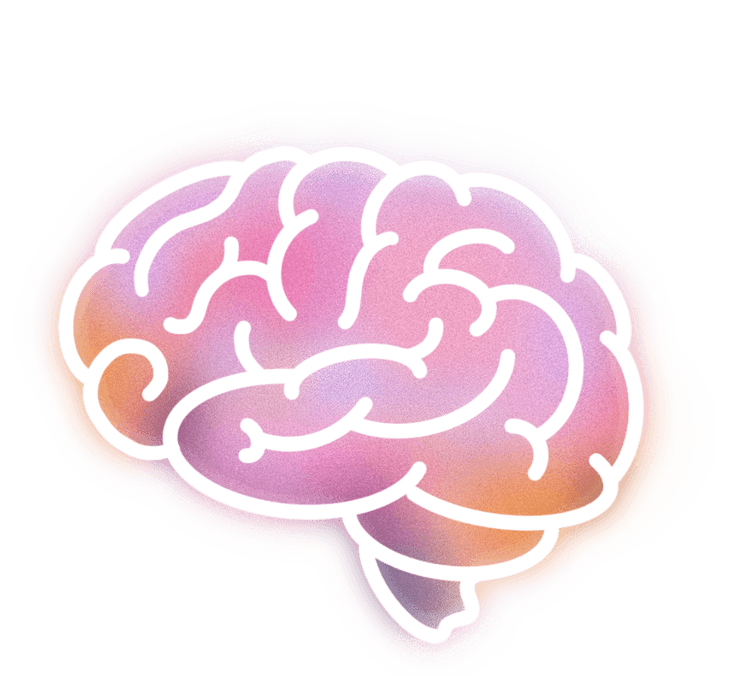
Most antidepressants work on serotonin and can take 4–8 weeks to take effect. Ketamine works faster, acting on the brain’s glutamate system, the most abundant neurotransmitter. Ketamine helps restore neural connections that depression has weakened. It works by modulating NMDA receptors, triggering a cascade of neuroplastic changes, including increased BDNF expression. This mechanism is behind the meaningful shift that many patients feel within hours or days, rather than weeks.
How it works
Blocks NMDA receptors and increases BDNFStudied in over 100 randomized trials since the early 2000sWorks through a pathway independent of serotoninCombines with your current antidepressant and therapySource: Zarate et al., 2006, Archives of General Psychiatry; Berman et al., 2000, Biological Psychiatry.
Learn moreWho it's for
FDA status of available ketamine treatments varies by condition. We flag each one honestly below.
Ketamine acts on NMDA receptors to trigger rapid synaptogenesis. Research suggests response rates around 60~70% in patients who haven't responded to traditional antidepressants.
FDA status: Off-label. Spravato, the FDA-approved nasal spray form, is approved for TRD.
Ketamine is one of the few treatments shown to reduce suicidal thoughts within hours rather than weeks. Spravato carries an FDA approval specifically for MDD with suicidal ideation.
FDA status: Off-label for IV ketamine. Spravato is FDA-approved for MDSI.

Emerging research suggests ketamine may help treatment-resistant anxiety, especially when paired with integration therapy. Evidence is earlier-stage than for depression.
FDA status: Off-label. Research is ongoing.
Research supports ketamine's use for PTSD symptoms, particularly when co-occurring with depression. Many patients report reduced intrusive thoughts and hyperarousal within the induction series.
FDA status: Off-label. Studies indicate benefit in treatment-resistant cases.
What to expect
Every protocol is individualized, but this is what most patients experience.
A 60-minute video consult with a psychiatrist. We review your history, current medications, and goals.
Six supervised infusions in-clinic. A clinician monitors you throughout. Most patients rest 30 minutes before heading home with a ride.
Weekly sessions with a therapist to translate what came up during infusions into lasting change.
Boosters every 4~8 weeks as needed, tapering over time. We re-evaluate outcomes at 3 and 6 months.
 Your brain is healing
Side effects & safety
Every treatment has tradeoffs. Here are ketamine's, stated plainly.
Dissociation during the infusion (floating sensation, time distortion)Nausea, sometimes managed with anti-nausea medicationDizziness or light-headednessTemporary elevated blood pressure and heart rate (monitored)Fatigue or drowsiness for a few hours post-sessionMost side effects resolve before you leave the clinic. You'll need a ride home after each session.
 Active psychosis or unmanaged schizophreniaUncontrolled high blood pressure or unstable cardiac conditionActive substance use disorder involving dissociativesPregnancy (we'll re-evaluate postpartum)
Your prescriber will review your full history before treatment.
Insurance & cost
IV and IM ketamine for psychiatric use is off-label, which limits insurance coverage. Out-of-pocket costs typically range from $400 to $750 per infusion.
Spravato, the FDA-approved nasal spray form, has broader coverage under most major plans. The clinic will run a free benefits check and walk you through both options before you commit to anything.

$400~$750
Typical per-infusion out-of-pocket cost

6 sessions
Standard induction protocol

Free
Psycle benefits check and clinic matching
Not sure ketamine is the right fit?
Our care navigators match you to vetted ketamine clinics based on your history, symptoms, and insurance. There's no one-size-fits-all here. Just a real conversation about what's most likely to work for you — including Spravato, TMS, or a combination.

"I've been suffering for so many years. I'm sorry, I don't mean to get emotional I just can't remember what it feels like to be motivated or inspired and this treatment sounds hopeful. I'm so grateful I answered the phone."
Gavin, Age 29

"I literally could cry right now, I'm so excited to just try and see if SPV Therapy works. I'm just so sick of nothing working; it sucks, and it's hard to get people to understand what you're going through because they just don't. Thank you so so so much, I appreciate you, you might've just changed my life."
Christina, Age 35

"I didn't know it was possible for me to receive something for my TRD. I always thought something was wrong with me or I was taking the medication wrong. I’m in tears knowing there’s something out there for me to try to be happy again."
Mike, Age 32

"This treatment has changed my life. I have really seen the difference and so has my family. After years of struggling, I'm finally off all of my psychiatric medications that were causing more harm than any good they were providing. I'm so grateful I took a risk and clicked the facebook ad I saw!"
Destiny, Age 38

"I've been dealing with this for so long and nothing has ever worked. Hearing that there's something that can actually help, and fast, I don't know, it just makes me feel like maybe things can actually get better. This is the first time I've felt hopeful in a long time."
Ella, Age 31

"I sat in that chair for an hour and came out with thirty years of junk cleared out of my head. That, to me, was a miracle. I haven't felt this good in probably three decades. It works. You can go from feeling like trash to feeling normal in the span of two hours. If you're on the fence, don't be. They'll treat you well, and you'll feel amazing when you leave."
Doug M.
Ketamine has been FDA-approved as an anesthetic since 1970. Its use for depression, anxiety, and PTSD is off-label, which means a psychiatrist prescribes it based on clinical research rather than a formal FDA indication. The FDA-approved nasal spray form of ketamine, Spravato (esketamine), is a separate product approved for treatment-resistant depression in 2019.
Most patients describe a gentle dissociation rather than hallucination. You may feel like you're floating, watching your thoughts from a distance, or slightly removed from your body. You remain conscious and can communicate with your clinician throughout.
Many patients notice a shift within 24 to 72 hours of their first infusion. Lasting improvement typically consolidates across the full six-session induction. Unlike SSRIs, which can take weeks, ketamine acts on the glutamate system for a faster response window.
No. You'll rest in clinic for 30 to 60 minutes post-infusion and need a ride home. We help you plan transportation before every visit. Most patients feel clear the next day.
Supervised, low-dose ketamine under a clinical protocol has a very low abuse liability. We screen for substance-use history during intake and monitor session frequency closely. This is different from recreational ketamine, which is used at much higher doses outside medical supervision.
IV and IM ketamine for psychiatric use is off-label, so insurance coverage is limited. Out-of-pocket costs typically run $400~$750 per infusion. Spravato, the FDA-approved nasal spray form, has broader insurance coverage. Your Psycle care coordinator will walk you through both options.
Usually, yes. Your prescribing psychiatrist will coordinate with the ketamine clinic to adjust anything that might interact with the protocol. Most patients continue their current medication throughout.
We reassess at session three. If ketamine isn't the right fit, your coordinator will walk you through Spravato, TMS, or a combination pathway without requiring a new intake.
A 15-minute call with a Psycle care coordinator. Free, confidential, no obligation.