


Do you often offer support to others but never seem to receive the same in return? It can be incredibly disheartening to feel alone and unappreciated despite your efforts to help those around you.
You’re not imagining it, and you’re not alone in feeling this way. Many people find themselves caught in a pattern of giving without receiving, leaving them exhausted, resentful, and wondering what went wrong.
The solution isn’t to stop supporting others or to become cold and selfish. Instead, it’s about understanding why this pattern exists, recognizing when relationships have become unbalanced, and learning how to set boundaries while still being the caring person you are.
In this guide, you’ll discover the psychology behind unreciprocated help, learn to identify one-sided relationships, and get specific strategies for creating the balanced, reciprocal connections you deserve.
Why This Happens: The Psychology Behind Unreciprocated Help
Before we dive into solutions, it’s crucial to understand why you might find yourself in this pattern. Understanding the “why” helps you address the root cause rather than just treating symptoms.
People-Pleasing as Learned Behavior
Many people who constantly help others learned this behavior in childhood. Perhaps you grew up in an environment where love and approval were conditional: given only when you were “good,” helpful, or meeting others’ needs. As a child, you discovered that helping others was a reliable way to receive validation and avoid conflict or rejection.
This pattern becomes deeply ingrained. Even as an adult, you may unconsciously seek approval through helpfulness, believing that your worth depends on how much you do for others. This isn’t a character flaw; it’s a survival strategy that once served you but may now be holding you back.
The “Helper” Identity Trap
Over time, being helpful can become central to your identity. You might think of yourself as “the person who’s always there for others” or “the one people can count on.” While these are admirable qualities, they can become a trap when your entire sense of self-worth depends on being needed.
When your identity is built around helping, saying “no” feels like betraying who you are. You fear that if you stop helping, people won’t value you anymore: because deep down, you worry that being helpful is the only thing that makes you lovable.
Why Helpers Attract Takers
Here’s an uncomfortable truth: when you consistently help without boundaries, you signal to others that your time and energy are always available. People who are more self-focused (whether consciously or unconsciously) naturally gravitate toward those who will give without asking for anything in return.
It’s not that you’re deliberately choosing to befriend selfish people. Rather, boundary-less helpers and self-focused takers often find each other. The helpers get to feel needed (fulfilling their identity), and the takers get their needs met without having to reciprocate. It’s a dysfunctional but stable dynamic, until the helper burns out.
Codependency vs. Healthy Helping
There’s an important distinction between healthy generosity and codependent helping:
Healthy helping comes from a place of genuine care and abundance. You help because you want to, within your capacity, and you can comfortably say no when needed. Your self-worth doesn’t depend on whether people need you.
Codependent helping comes from a place of fear and scarcity. You help because you’re afraid of rejection, conflict, or being seen as selfish. You help even when you’re depleted, and you feel anxious or guilty when setting boundaries. Your sense of worth is tied to being needed.
The Benjamin Franklin Effect
Interestingly, research shows that we tend to like people we’ve helped MORE than we like people who have helped us. This phenomenon, known as the Benjamin Franklin effect, explains why constantly helping others doesn’t necessarily make them appreciate or help you back.
When we do someone a favor, we rationalize that we must like them (otherwise why would we help?). But when someone helps us, we don’t necessarily feel the same emotional shift. This means your constant helping might not be creating the reciprocal bonds you hope for: it might just be reinforcing an imbalanced dynamic.
11 Signs You’re in a One-Sided Relationship
Before you can fix the problem, you need to recognize it. Not all relationships that feel unbalanced are truly one-sided: sometimes we just hit rough patches where one person needs more support temporarily. But if you recognize multiple signs below, you may be in a chronically unbalanced relationship.
1. You’re Always the Initiator
You’re the one sending the first text, making the phone calls, and suggesting plans. If you stopped reaching out, you wonder if the friendship would simply fade away. When you do connect, it’s because you made it happen.
2. They Only Reach Out When They Need Something
You notice a pattern: whenever your phone shows their name, you brace yourself because you know they want something. It might be advice, emotional support, money, or a favor. They rarely (or never) contact you just to check in, share good news, or spend time together.
3. Your Problems Get Minimized or Ignored
When you try to share what’s going on in your life, they change the subject, offer dismissive advice (“just don’t think about it”), or start talking about their own problems. Your vulnerabilities are treated as inconvenient or dramatic, while theirs require immediate attention and empathy.
Example: Sarah spent three hours helping her friend Jamie prepare for a job interview. The next week, when Sarah mentioned feeling anxious about her own career situation, Jamie responded with “Oh, you’ll figure it out” and immediately launched into a story about her new coworker.
4. Conversations Revolve Around Them
Most of your discussions center on their interests, problems, and experiences. When you share something about yourself, they either redirect to a similar story about themselves or show clear disinterest. You leave conversations feeling unheard.
5. You Feel Drained After Interactions
Rather than feeling energized and connected after spending time together, you feel exhausted. It’s as though they’ve taken your emotional energy without replenishing any of their own. You might need hours or days to recover after seeing them.
6. They Cancel Last-Minute But Expect Your Availability
When they have plans with you, cancellations are frequent and often last-minute. But when they need you, they expect you to drop everything. Your time is treated as flexible and less valuable than theirs.
7. They Don’t Celebrate Your Wins
When good things happen to you, their response is lukewarm at best. They might seem envious, quickly minimize your achievement, or pivot to their own accomplishments. You’ve learned not to share your successes because the response feels deflating rather than celebratory.
8. You Make All the Compromises
From choosing restaurants to planning trips, you’re always the one adjusting to their preferences. When you do express a preference, it’s overruled or ignored. The relationship operates on their terms, their schedule, and their comfort level.
9. You Feel Guilty for Having Needs
When you do ask for help or express a need, you feel guilty, selfish, or burdensome. This guilt may be self-imposed, or they might reinforce it by sighing, seeming annoyed, or making comments about how busy or stressed they are.
10. The Relationship Feels Transactional
Deep down, you sense that they maintain the friendship because of what you provide, not because they genuinely enjoy your company. If you stopped being useful, you suspect they would disappear.
11. Your Gut Tells You Something’s Off
Trust your instincts. If you consistently feel used, unappreciated, or like you’re putting in far more than you receive, your intuition is probably correct. Don’t dismiss these feelings as you being “too sensitive” or “expecting too much.”
The Difference Between Healthy Helping and People-Pleasing
Not all helping is created equal. The goal isn’t to stop being generous—it’s to ensure your generosity comes from a healthy place.
| Healthy Helping | People-Pleasing |
| I help because I genuinely want to | I help because I fear rejection or conflict |
| I can say “no” without excessive guilt | Saying “no” makes me extremely anxious |
| I help within my capacity and limits | I help until I’m completely depleted |
| I expect basic reciprocity and respect | I expect nothing in return (and get nothing) |
| My self-worth isn’t dependent on helping | My self-worth depends on being needed |
| I help and feel good about it | I help and feel resentful later |
| Boundaries feel natural and necessary | Boundaries feel selfish and wrong |
| I’m comfortable receiving help | I struggle to accept or ask for help |
If you find yourself consistently in the right column, you’ve likely crossed from kindness into people-pleasing territory. This matters because people-pleasing leads to burnout, resentment, and ironically, attracts people who are happy to take advantage of your boundarylessness.
Reflect on Your Motivations and Patterns
Developing self-awareness is an essential first step in understanding why you may find yourself always helping others but struggling to receive help in return. Explore your motivations for helping others and behavioral patterns that could contribute to this feeling of always helping but getting nothing in return.
Through this reflection, you can consider the source of your feelings. Do they stem from unhealthy relationships and a lack of mutual respect? Or could your own insecurities and expectations be playing a role? It’s possible that both factors contribute to this dynamic.
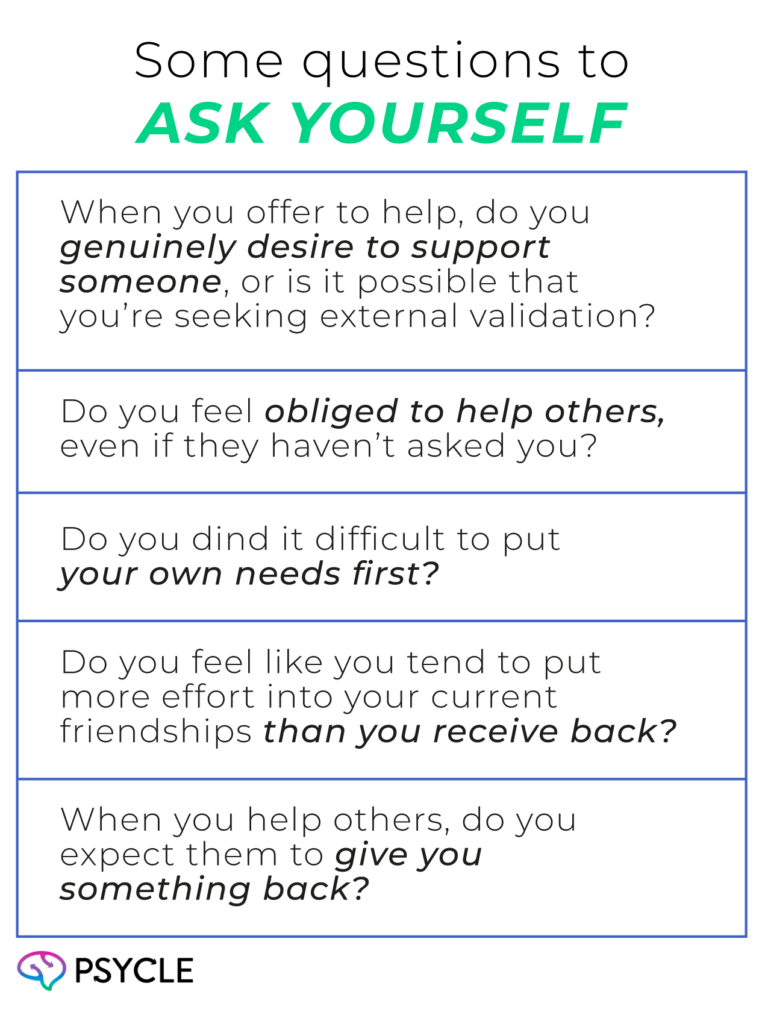
- When did I first learn that my value came from helping others?
- What am I afraid will happen if I say “no”?
- Do I help because I want to, or because I fear the consequences of not helping?
- Am I trying to earn love and approval through helpfulness?
- Do I feel worthy of help and support, or do I believe I need to handle everything alone?
Set Clear Boundaries (With Specific Scripts)
Setting clear boundaries is crucial for maintaining healthy relationships. When you consistently help others without establishing limits, it can lead to feeling overwhelmed and depleted. Learning to say “no” when necessary is an essential skill that allows you to protect your time and energy.
Establishing boundaries involves understanding your own limits and communicating them effectively. It’s important to recognize that saying “no” doesn’t make you selfish or uncaring. Instead, it enables you to prioritize your well-being and ensure that you have the capacity to support others effectively.
How to Say No Without Explaining Yourself
The biggest mistake people-pleasers make isn’t failing to say no—it’s how they say it. Long explanations invite pushback and negotiation. Keep your no’s clear and concise:
Effective Scripts:
- “I appreciate you thinking of me, but I can’t take that on right now.”
- “That doesn’t work for me, but I hope it goes well.”
- “I’m not available for that, but thanks for asking.”
- “I won’t be able to help with this.”
- “I don’t have the bandwidth for that right now.”
Why “I Don’t” is More Powerful Than “I Can’t”:
Research shows that saying “I don’t” instead of “I can’t” helps you exit commitments more gracefully. “I can’t” implies you would if you could: it invites negotiation (“But what if I help you with X?”). “I don’t” establishes a clear personal boundary:
- Weak: “I can’t help you move this weekend.”
- Strong: “I don’t help with moves on weekends: that’s my recharge time.”
The 24-Hour Rule
Make it a personal rule: never commit to anything immediately. Your default response to any request should be:
“Let me check my schedule and get back to you.”
This simple phrase buys you time to:
- Assess whether you actually want to help
- Check if you have the capacity
- Formulate a thoughtful response
- Say no via text or email (easier than in person)
Research shows that delaying decisions by even 50-100 milliseconds improves decision quality. Give yourself 24 hours, and you’ll make better choices.
When People Push Back on Your Boundaries
Not everyone will like your newfound assertiveness. Some people—especially those who’ve benefited from your boundarylessness—may push back. Here’s how to stay firm:
When they say: “But you always help with this!” You respond: “I know, and that’s exactly why I need to pull back. I’ve been overextending myself.”
When they say: “I thought I could count on you.” You respond: “You can count on me for [specific things], but I can’t take this on right now.”
When they say: “You’re being selfish.” You respond: “Taking care of myself isn’t selfish. I need to protect my energy so I can be there when it really matters.”
When they get angry or give you the silent treatment: This is information. Someone who punishes you for having boundaries is showing you they were using you, not valuing you.
Communicate Your Needs
Supporting a friend might clash with your own needs. They might ask for your company when you need solitude, or request help when you’re already busy. When communicating your boundaries, be clear and specific. Explain why you can’t help at the moment. This helps your friend understand and respect your limits.
You should also listen to the needs of your friend, and let them know that you understand why they may be requesting help. You may be able to find a middle ground where both of your needs can be accommodated. However, if compromising, still remain clear on your boundaries.
Example Script: “I can see this is really important to you, and I want to be supportive. Right now I’m dealing with [specific situation], so I’m not in a place to help with [their request]. What I can do is [alternative offering, if any]. Would that be helpful?”
Communicate Your Boundaries Assertively
Once you’ve identified your boundaries, it’s crucial to communicate them to others. Clearly express your needs and limits by using assertive communication, which involves being direct yet respectful. You can use “I” statements to express how certain actions or requests impact you personally.
For example, instead of saying, “You’re always demanding too much from me,” try saying, “I feel overwhelmed when I take on too many tasks at once.”
People may test or push against your boundaries, especially if they are accustomed to you always saying “yes.” Stay firm in your limits and reinforce them when necessary. Over time, as others come to understand and respect your boundaries, you’ll find yourself experiencing greater balance and well-being.
How to Ask for Help When You’re Always the Helper
One of the most challenging aspects of breaking the cycle is learning to receive. Many helpers struggle with asking for help because it feels vulnerable, weak, or like they’re burdening others. But if you never ask for help, you’re robbing people of the opportunity to show up for you—and you’re reinforcing the pattern of one-sided relationships.
Why Helpers Struggle to Ask
The vulnerability factor: Asking for help means admitting you can’t do it alone. For someone whose identity is built around being capable and helpful, this feels like exposing a shameful weakness.
Fear of rejection: What if they say no? For helpers, rejection feels like confirmation that they’re only valuable when they’re giving.
The “strong one” identity: You’ve become the person everyone leans on. Asking for help shatters that image and forces others to see you as someone with needs, not just as a resource.
Start Small: Practice Asking for Low-Stakes Favors
You don’t have to start by asking for major help. Begin with small requests:
- “Could you grab me a coffee while you’re up?”
- “Would you mind looking over this email before I send it?”
- “Can you help me carry this to my car?”
These low-stakes requests help you practice asking and receiving without high emotional risk.
Use “I” Statements
Frame your requests in terms of your experience:
- “I could really use some support with this project. Would you have 30 minutes this week?”
- “I’m feeling overwhelmed right now. Could we talk?”
- “I need help figuring this out. Do you have any thoughts?”
The Benjamin Franklin Effect: Letting Others Help Makes Them Like You More
Counterintuitively, when you let someone help you, they often like you MORE afterward. The Benjamin Franklin effect shows that people rationalize their helpful actions by deciding they must care about you (otherwise, why would they help?).
By allowing others to help, you’re actually strengthening the bond—and creating opportunities for reciprocal relationships.
Reframe Asking as Giving
Shift your perspective: When you ask for help, you’re giving someone the gift of:
- Feeling needed and valuable
- Demonstrating their competence
- Deepening the relationship through reciprocity
- Being the kind of friend they want to be
This isn’t manipulation: it’s recognizing that healthy relationships involve mutual giving and receiving.
What to Do If Someone Says No
If someone declines your request, remember: This is data, not rejection.
It tells you:
- They might not have capacity right now (legitimate)
- They may not be as invested in the relationship as you thought (important information)
- They have boundaries too (which you’re learning to respect)
Don’t catastrophize a single “no.” But if someone consistently refuses when you need support while expecting you to always show up for them, that’s a clear sign of a one-sided relationship.
Foster Balanced Relationships
In a healthy, balanced relationship, both parties should feel comfortable expressing their needs. This involves both asking for help and being able to express boundaries and say no when necessary.
The dynamic should feel reciprocal, with both sides actively participating in offering support. However, this doesn’t mean you should expect help in a give-and-take manner where you’re keeping score. Help should be offered out of genuine care, not just expectation.
Pay attention to the overall pattern. Are you generally giving 80% and receiving 20%? That’s an imbalance. Healthy friendships may not always be exactly 50/50 at every moment, but over time, the give and take should roughly balance out.
Find Support Networks
When you feel alone and unsupported, seeking out support networks and communities with shared values can be incredibly beneficial. These networks provide a sense of belonging and understanding and offer the support and validation you need to thrive.
Support networks can come in various forms, ranging from local community groups to online forums and social media communities. Look for:
- Support groups for people recovering from codependency
- Therapy or counseling groups focused on boundaries
- Hobby or interest groups where relationships form around shared activities
- Online communities of people working on similar patterns
Shared values play an essential role in support networks as they create a foundation of common ground and mutual understanding. Connecting with individuals who share your values and beliefs makes it easier to build meaningful relationships and offer genuine support.
When It’s Time to Walk Away: Ending One-Sided Friendships
Sometimes, despite your best efforts, a relationship simply cannot or should not be saved. Not every relationship is worth maintaining, and recognizing when to walk away is a crucial skill.
Signs a Friendship Is Beyond Repair
Consider ending the relationship if:
- You’ve clearly communicated your boundaries and nothing has changed
- They become angry, defensive, or punitive when you set limits
- The relationship consistently leaves you feeling drained, used, or bad about yourself
- They show no empathy for your needs or experiences
- They only maintain contact when they want something
- You’ve given them multiple chances and seen no genuine effort to change
- The thought of spending time with them fills you with dread rather than joy
The “Fade Out” vs. Direct Conversation Approach
The Fade Out: This approach works well when:
- The friendship is already casual
- Direct conversation would create unnecessary drama
- The person is unlikely to respect your boundaries even if stated
How to do it:
- Gradually reduce your availability
- Take longer to respond to messages
- Decline invitations without over-explaining
- Stop initiating contact
- Match their level of effort (which is probably minimal)
The Direct Conversation: This approach is better when:
- The relationship has been significant
- You want to give them a final chance to understand
- Closure is important to you
Script for ending a friendship: “I’ve been reflecting on our friendship, and I’ve realized our relationship isn’t working for me anymore. I feel like I’ve been putting in significantly more effort than I get back, and that’s not sustainable. I need to step back and focus my energy on relationships that feel more balanced. I wish you well.”
If they push back or ask for another chance: “I appreciate that, but I’ve already made my decision. This is what I need for my wellbeing.”
How to Handle Guilt and Grief
Ending a friendship, even an unhealthy one, often triggers guilt and grief. This is normal. You may feel:
- Guilt for “abandoning” someone
- Sadness over losing what you hoped the friendship could be
- Relief (which might then cause more guilt)
- Doubt about whether you made the right choice
Remember:
- You’re not responsible for managing their emotions
- Their reaction to your boundaries is information, not your fault
- Ending an unhealthy relationship creates space for healthier ones
- It’s okay to grieve what you hoped for, even if it never truly existed
Example: Marcus spent five years helping his friend Tony with everything from career advice to financial support. When Marcus went through a difficult divorce, Tony never checked in. When Marcus finally said he needed to step back from the friendship, Tony accused him of being ungrateful and selfish. Marcus grieved: not for Tony, but for the friend he thought Tony was. Walking away was still the right choice.
Prioritize Self-Care
When you constantly find yourself helping others without receiving much in return, it is crucial to prioritize self-care. By focusing on your own well-being, you can prevent burnout and maintain a healthy sense of balance in your life.
Self-care involves taking deliberate actions to care for your physical, mental, and emotional health. It means dedicating time and energy to activities that nurture and replenish you. Prioritizing self-care is not selfish; it is an essential aspect of maintaining your overall well-being.
Practical Self-Care Tips
Here are some practical self-care tips that can help you prioritize yourself:
Schedule Non-Negotiable “Me Time” Set aside dedicated time for activities that bring you joy and relaxation. Put it in your calendar like any other important appointment. This might be reading, taking a bath, pursuing a hobby, or simply doing nothing.
Move Your Body Engage in regular exercise and nourish your body with nutritious food. Physical health directly impacts your capacity to set boundaries and resist people-pleasing patterns.
Practice Mindfulness and Meditation These practices help you calm your mind, reduce stress, and develop the awareness needed to recognize when you’re slipping into old patterns.
Prioritize Sleep Schedule regular sleep and ensure you get enough rest. When you’re exhausted, you’re more likely to default to people-pleasing behaviors because you lack the energy to resist.
Express Yourself Creatively Engage in hobbies or activities that allow you to express yourself without serving others’ needs. Paint, write, cook for yourself, garden: activities where the only beneficiary is you.
Connect with Reciprocal Relationships Spend time with loved ones who actually give back. Nurture meaningful relationships where you feel valued for who you are, not just what you do.
Recognize Your Worth

Understanding and acknowledging your intrinsic worth, separate from what you do for others, is fundamental to breaking free from unreciprocated helping patterns.
Your worth is not determined by:
- How much you help others
- How needed you are
- How much you sacrifice
- Whether people appreciate your efforts
- Your usefulness to others
Your worth is inherent. You deserve love, respect, and support simply because you exist: not because you’ve earned it through service.
Tips for Recognizing Your Worth
1. Practice Self-Reflection: Set aside time regularly to reflect on your strengths, achievements, and values. Recognize your unique qualities and the positive impact you have on others—not just through helping, but through your presence, perspective, and personality.
2. Challenge Negative Self-Talk: Pay attention to your inner dialogue and challenge negative thoughts or beliefs about yourself. When you catch yourself thinking “If I don’t help, they won’t like me,” ask yourself: “Is that actually true? Do I have evidence for that?”
Replace them with affirmations that reinforce your worth and capabilities:
- “My worth doesn’t depend on being useful to others.”
- “I deserve relationships where care flows both ways.”
- “Saying no to others is saying yes to myself.”
3. Set Boundaries: Identify your limits and communicate them assertively to others. Respect your own needs and priorities, even if it means saying no to others’ requests. Each time you honor a boundary, you’re proving to yourself that you matter.
4. Celebrate Achievements: Acknowledge and celebrate your accomplishments, no matter how small they may seem. Celebrating milestones reinforces your sense of self-worth and motivates you to pursue further growth—in your own interests, not just in service to others.
5. Surround Yourself with Supportive People: Surround yourself with individuals who uplift and validate you. Cultivate relationships with friends, family, or mentors who appreciate and affirm your worth: not just your helpfulness.
Practice Patience (With Yourself and Others)
In our interactions with others, it’s important to recognize that individuals may have their own unique challenges and limitations when it comes to offering support. Patience is a virtue that allows us to approach situations with understanding and empathy.
By cultivating patience, we can give others the time and space they need to navigate their own struggles and find the capacity to reciprocate support. Sometimes, it may take longer for them to do so, but demonstrating patience can contribute to fostering deeper connections.
However, and this is crucial, patience doesn’t mean accepting one-sided relationships indefinitely. There’s a difference between:
- Being patient with a friend going through a rough patch (temporary imbalance)
- Indefinitely accepting a relationship where you always give and never receive (chronic imbalance)
Be patient with your own growth too. Changing lifelong people-pleasing patterns takes time. You won’t suddenly transform into someone with perfect boundaries overnight. Each small step, each time you say no, each time you ask for help, is progress.
I Always Help Others But Nobody Helps Me Quotes
Sometimes it helps to know you’re not alone in this experience. Here are some powerful quotes that capture the feeling of giving without receiving:
“You can’t pour from an empty cup. Take care of yourself first.” (Unknown)
This quote reminds us that self-care isn’t selfish; it’s necessary. When you give and give without replenishing yourself, you eventually have nothing left to offer anyone, including yourself.
“Some people will only ‘love’ you as much as they can use you. Their loyalty ends where the benefits stop.” (Unknown)
A hard truth, but an important one. This quote speaks to the reality that not everyone who accepts your help is truly a friend. Pay attention to who stays when you set boundaries.
“Being a good person does not mean you have to put up with other people’s crap.” (Unknown)
You can be kind, generous, and compassionate while still refusing to be taken advantage of. These qualities are not mutually exclusive.
“Sometimes the people you’d take a bullet for are the ones behind the trigger.” (Unknown)
This captures the painful reality of realizing that those you’d do anything for wouldn’t do the same for you. It’s a wake-up call to reevaluate where you’re investing your energy.
“You are not required to set yourself on fire to keep other people warm.” (Unknown)
Perhaps the most powerful reminder: Your wellbeing matters just as much as anyone else’s. Sacrificing your own health, happiness, and peace to meet others’ needs is not noble; it’s unsustainable.
Conclusion
Feeling like you always help others but receive nothing in return is emotionally exhausting and can leave you feeling alone and undervalued. But this pattern isn’t your destiny: it’s a learned behavior that can be unlearned.
The path forward involves understanding why this pattern exists, recognizing the signs of one-sided relationships, setting clear boundaries, learning to ask for and receive help, and sometimes making the difficult decision to walk away from relationships that drain you.
Remember:
- Your worth isn’t determined by your usefulness to others
- Setting boundaries doesn’t make you selfish
- Healthy relationships involve mutual give and take
- You deserve to receive the same care and support you offer others
- It’s okay to prioritize your wellbeing
Prioritizing self-care while supporting others is crucial in finding balance in relationships. When you prioritize your own well-being, you can better nurture others without depleting yourself.
If you feel like you’re helping others with no return, first reflect on where these feelings come from, then consider your needs, the nature of your relationships, and practice self-care and patience: with yourself and with the process of change.
You are worthy of reciprocal, balanced relationships. You are worthy of support. You are worthy, period. Now it’s time to start believing it and acting like it.
FAQs
How Can I Effectively Communicate My Needs to Others?
Use clear, direct “I” statements that express how you feel and what you need. Avoid over-explaining or apologizing excessively. For example: “I feel overwhelmed when I take on too many commitments. I need to say no to this request.” Remember that clearly expressing your needs is respectful, not selfish.
What’s the Difference Between Being Kind and Being a People-Pleaser?
Kindness comes from genuine care and abundance: you help because you want to, within your capacity, and can comfortably say no. People-pleasing comes from fear: you help because you’re afraid of rejection or conflict, often helping until you’re depleted. Your self-worth shouldn’t depend on being needed.
How Do I Know if a Friendship Is One-Sided?
Look for patterns: Are you always initiating contact? Do they only reach out when they need something? Do they minimize your problems while expecting sympathy for theirs? Do you feel drained after interactions? If multiple signs appear consistently, the friendship is likely imbalanced.
Is It Selfish to Stop Helping People Who Don’t Reciprocate?
No. Protecting your energy and requiring reciprocity isn’t selfish: it’s healthy. You’re not obligated to keep giving to people who take you for granted. Setting boundaries ensures you have enough to give to relationships that truly matter and to yourself.
How Long Should I Wait Before Ending a One-Sided Friendship?
There’s no set timeline, but consider ending it if you’ve clearly communicated your boundaries, given them time to change (3-6 months is reasonable), and seen no genuine effort or improvement. If they react with anger or punishment to your boundaries, that’s a clear sign the friendship isn’t healthy.
What if My Family Members Are the Ones Who Never Help Me?
Family relationships are complex, but the same principles apply. You can set boundaries with family while maintaining the relationship. Be clear about what you will and won’t do. Remember that you don’t owe unlimited service to anyone, even family, especially if it’s not reciprocated.
How Do I Ask for Help Without Feeling Guilty?
Start with small, low-stakes requests. Reframe asking as giving others the gift of helping (the Benjamin Franklin effect shows people like you more when they help you). Remember that accepting help is part of balanced relationships. Practice tolerating the discomfort: guilt lessens with repetition.
Can People-Pleasing Be a Trauma Response?
Yes. Many people develop people-pleasing behaviors as a survival strategy in childhood, especially in environments where love was conditional or where saying no resulted in punishment or rejection. If this resonates with you, working with a therapist who specializes in trauma can be incredibly helpful.