

Short answer: Sitting in the shower can be a sign of depression, but not always. Depression causes fatigue, low motivation, and emotional overwhelm that can make even basic self-care feel impossible. This behavior becomes concerning when accompanied by other symptoms like persistent sadness, social withdrawal, or changes in sleep and appetite. If you notice this pattern, consider reaching out to a mental health professional.
Have you ever found yourself sitting in the shower for an extended period, feeling lost in thought or too drained to stand up? While it may seem like a harmless act, sitting in the shower can actually be a sign of depression.
Depression affects people in different ways, and sometimes, daily activities such as taking a shower can become overwhelming. Sitting in the shower may provide a temporary escape or a space to process difficult emotions.
It is essential to recognize this behavior as a potential symptom of depression and to take steps towards seeking support and managing your mental health.
Key Takeaways
- Sitting in the shower for an extended period can be a sign of depression.
- Depression can impact daily activities, including showering.
- Sitting in the shower may provide a temporary escape or space to process emotions.
- It is crucial to recognize this behavior as a potential symptom of depression.
- Seeking professional help can be beneficial in managing and overcoming depression.
Understanding Depression
Depression is a complex mental health condition that goes beyond occasional sadness. It affects how a person thinks, feels, and handles daily activities, often causing persistent feelings of hopelessness, fatigue, and a loss of interest in things they once enjoyed. Depression can also lead to physical symptoms such as changes in sleep patterns, appetite fluctuations, and chronic pain.
Recognizing depression as a clinical condition – rather than a personal weakness – is an important first step toward understanding why everyday activities, including showering, can become overwhelming.
The Connection Between Shower Habits and Mental Health
Showering is a regular habit that we tend to overlook, but how we shower can tell us a lot about our mental health. Depression can make even the simplest tasks seem overwhelming and daunting, including taking a shower.
In some cases, individuals struggling with depression may choose to sit in the shower for extended periods. As a result, this behavior can be an indication of underlying mental health concerns.
Depression can affect one’s daily routine. People who are depressed may lack the motivation or energy to complete daily tasks, and this can result in prolonged shower sessions. Sitting in the shower for an extended period can be a sign of hopelessness, sadness, and exhaustion.
Individuals suffering from depression may find solace in the shower, and sitting in the shower can provide a temporary escape from the feelings of despair they may experience.
Why People Sit in the Shower When Depressed
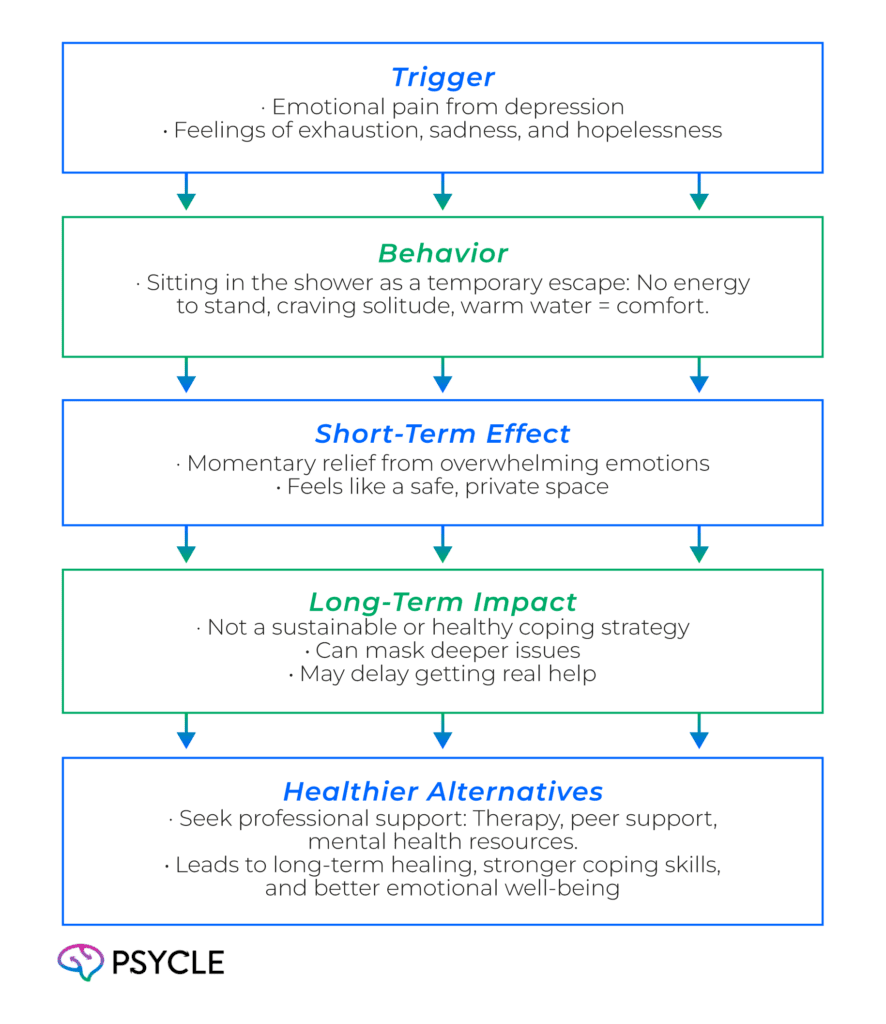
Sitting in the shower when depressed can stem from several factors:
| Reason | What It Looks Like |
| Emotional overwhelm | The shower becomes a safe, private space to release pent-up emotions. When feelings become too intense to manage in everyday settings, the enclosed environment offers a contained space for emotional expression. |
| Lack of motivation and energy | Depression drains physical and mental energy, making even standing feel exhausting. Sitting down may reflect the body’s inability to sustain the effort of a routine task. |
| A desire for temporary escape | The warmth of the water and the sound of it running create an immersive, soothing environment that offers a brief reprieve from persistent negative thoughts and emotional pain. |
| A need for comfort and control | When depression makes life feel chaotic and unmanageable, the small act of choosing to sit in warm water can provide a sense of comfort and a feeling of regaining some control. |
The Cycle of Poor Self-Care and Depression
If you find yourself sitting in the shower for extended periods, it is essential to explore the underlying reasons why. While it may feel like a temporary escape, prolonged sessions in the shower can lead to further isolation and feelings of hopelessness, creating a cycle where poor self-care worsens self-esteem and reinforces depressive symptoms.
Over time, neglecting routine hygiene can contribute to feelings of shame and embarrassment, which may cause further social withdrawal and deepen the depression.
Seeking professional help can be beneficial in understanding and managing depression, and there is no shame in doing so. Remember, depression is a treatable condition, and seeking help is a sign of strength.
Why Do Depressed People Not Shower?
While some people with depression sit in the shower for long periods, others stop showering altogether. This is not about laziness or a lack of awareness – depression fundamentally changes how the brain processes motivation, energy, and routine tasks.
For many, the full sequence of getting undressed, standing, washing, drying off, and getting dressed again feels like an impossible series of steps when even getting out of bed takes everything they have.
Psychological Reasons for Not Showering
Several psychological factors explain why depression makes showering so difficult:
- Executive dysfunction. Depression impairs the brain’s ability to plan, initiate, and complete multi-step tasks. Showering requires sequencing several actions in a row, which becomes overwhelming when executive function is compromised.
- Fatigue and low energy. The physical exhaustion that comes with depression is not ordinary tiredness – it can make standing for the length of a shower feel genuinely unsustainable.
- Feelings of worthlessness. Depression can distort self-perception to the point where a person feels they do not deserve basic care, or that maintaining hygiene simply does not matter.
- Cognitive fog. Memory problems and difficulty concentrating can cause someone to forget about showering entirely, or lose track of how many days have passed since their last shower.
- Sensory overload. For some, the sensation of water, temperature changes, and the effort of drying off can feel overstimulating during a depressive episode.
Understanding these reasons can help reduce the stigma around hygiene struggles during depression and encourage a more compassionate response – both toward oneself and others.
The Significance of Sitting in the Shower as a Depressive Symptom
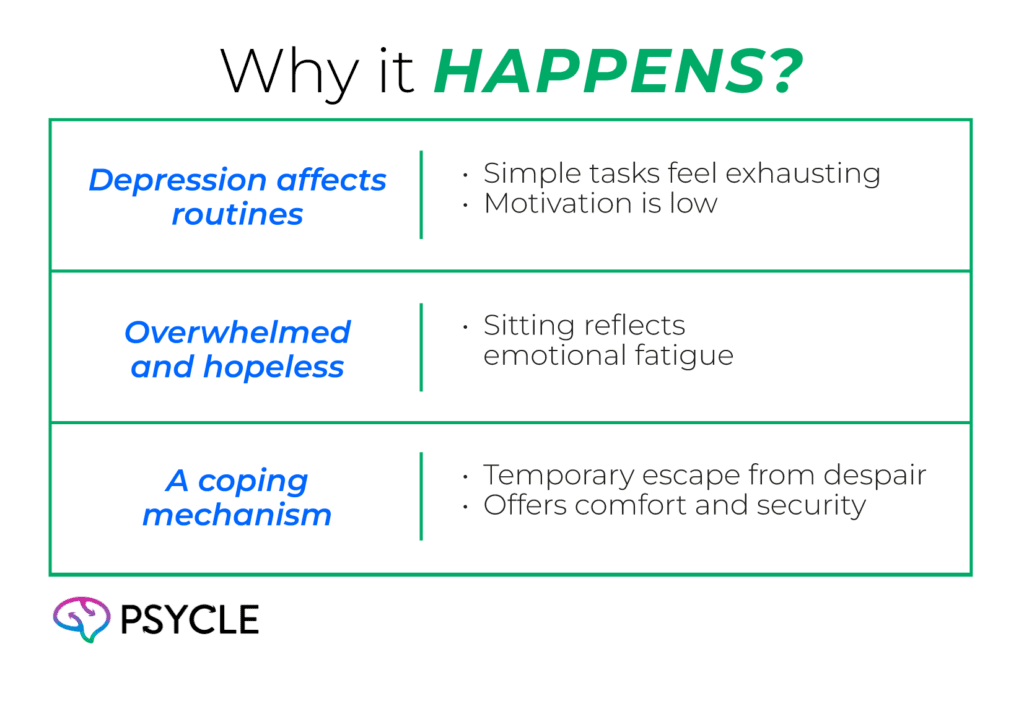
When someone is struggling with depression, it can often feel like there is nowhere to turn for relief. For some individuals, the act of sitting in the shower can serve as a temporary escape from the overwhelming sadness and exhaustion that can come with depression.
The lack of motivation to stand up, the desire for solitude, and the comfort of the warm water can provide a temporary reprieve from the emotional pain of depression.
It is essential to recognize the significance of this behavior as a potential symptom of depression. While sitting in the shower may provide temporary relief, it is not a sustainable or healthy coping mechanism.
However, seeking professional support can assist in managing depression and developing healthier coping mechanisms for the long term. By seeking help and support, one can take the first steps towards better mental health and well-being.
Does Sitting in the Shower Mean You’re Depressed?
Sitting in the shower can be a sign of depression, but it doesn’t always mean you are depressed. It often reflects a need for a moment of solitude, relaxation, or an escape from overwhelming thoughts. For some, the shower offers a safe space to decompress, think, or simply be still.
However, if this behavior is accompanied by other symptoms of depression, such as persistent sadness, loss of interest in activities, or changes in sleep and appetite, it might indicate a deeper issue. You must consider the context and overall mental health before drawing conclusions.
Other Signs of Depression to Watch For
Sitting in the shower becomes a greater concern when it appears alongside other common symptoms of depression. Watch for these warning signs:
- Persistent sadness or emptiness that lasts for two weeks or more
- Loss of interest in hobbies or activities that once brought joy
- Changes in appetite or weight – either significant increase or decrease
- Sleep disturbances – difficulty sleeping, or sleeping too much
- Difficulty concentrating or making everyday decisions
- Social withdrawal – pulling away from friends, family, and activities
- Unexplained physical pain – headaches, back pain, or muscle aches without clear cause
- Feelings of worthlessness or excessive guilt that seem disproportionate to the situation
If sitting in the shower is accompanied by several of these symptoms, it may be time to reach out to a mental health professional for guidance.
Is it Normal to Sit in the Shower?
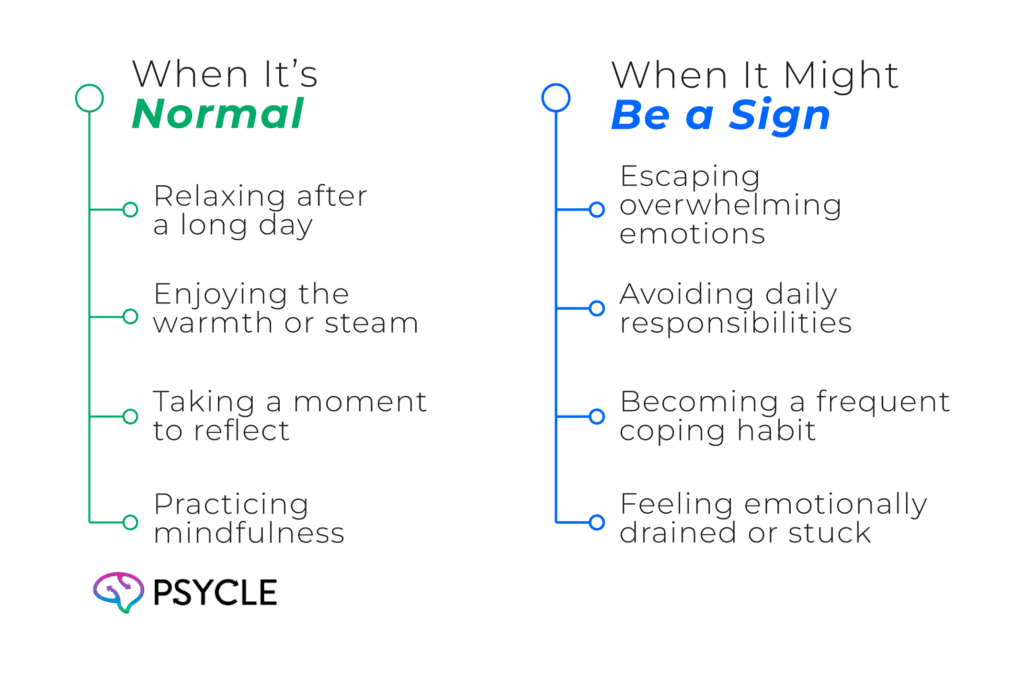
Yes, it can be perfectly normal to sit in the shower. Many people find the shower a calming and private space to relax and reflect. Sitting in the shower can be a way to unwind after a long day or to enjoy the soothing effects of warm water. Some people sit simply because they find it more comfortable, or because they enjoy the meditative quality of warm water running over them.
When It’s Normal vs. When It’s a Concern
| Normal | Potentially Concerning |
| Sitting occasionally to relax or decompress after a stressful day | Sitting in the shower most days because you cannot find the energy to stand |
| Enjoying the warm water as a mindful, intentional moment | Losing track of time and staying far longer than intended |
| Choosing to sit as a preference, not out of necessity | Feeling unable to get out of the shower or complete the routine |
| Getting up and continuing your day without difficulty afterward | Noticing the behavior alongside persistent sadness, withdrawal, or changes in sleep and appetite |
If this behavior becomes a regular escape from overwhelming emotions or daily responsibilities, it might be worth exploring further. It is important to pay attention to your mental health and seek support if you notice any concerning patterns.
Is Taking Multiple Showers a Day a Sign of Depression?
Taking multiple showers a day can sometimes be connected to depression, though the reasons differ from avoiding showers altogether.
For some people, excessive showering becomes a way to cope with emotional pain – the temporary relief of warm water provides a brief escape they repeatedly seek throughout the day. For others, it can reflect a need to regain a sense of control when depression makes the rest of life feel unmanageable.
Excessive showering can also overlap with obsessive-compulsive disorder (OCD), where repetitive washing is driven by intrusive thoughts about contamination or a compulsive need to feel clean.
If you find yourself showering multiple times a day and it is interfering with your daily routine, relationships, or causing skin irritation, it is worth discussing with a mental health professional to understand what may be driving the behavior.
Tips for Managing Hygiene When You’re Struggling
If depression is making it difficult to maintain your shower routine or other self-care habits, small and manageable adjustments can help:
- Break the task into smaller steps. Rather than thinking about a full shower, focus on just stepping in and letting the water run over you.
- Set realistic goals. Showering twice a week instead of daily can reduce the pressure and make the task feel less overwhelming.
- Create a comfortable environment. Playing calming music, using warm towels, or lighting a scented candle can make the experience more inviting.
- Use a shower chair. If sitting in the shower feels better than standing, a chair can reduce physical strain and make the routine easier.
- Practice self-compassion. Struggling with hygiene during depression is a symptom of the condition, not a reflection of your character or worth.
The Relief of Finally Taking a Shower
For some individuals struggling with mental health issues, even the thought of taking a shower can feel overwhelming. Depression, anxiety, and other mental health conditions can drain motivation, making basic self-care tasks difficult to initiate.
However, many people who struggle with showering often report feeling significantly better once they finally step into the warm water.
The physical sensation of water can be soothing, providing a sense of renewal and comfort. The act of showering itself can symbolize a fresh start, helping to wash away some of the emotional weight that may have built up over time.
While it can be difficult to begin, acknowledging the positive impact of a shower may help in gradually rebuilding a self-care routine.
Conclusion
If you or someone you know exhibits this behavior along with other signs of depression, it is important to address the underlying mental health concerns and seek support. Struggling with daily routines like showering during depression is a common experience and a symptom of the condition – not a sign of laziness or personal failure.
Be patient with yourself, take small steps, and remember that recovery is possible. There is help available, and you are not alone in your struggles.
FAQs
Why Do People Sit in the Shower When They Are Depressed?
People may choose to sit in the shower as a coping mechanism or as a reflection of their emotional state. The shower can provide a sense of comfort and isolation during times of distress.
Should I Be Concerned if I Sit in the Shower for Long Periods?
If you find yourself sitting in the shower for extended periods and it is affecting your daily functioning and overall well-being, it may be a good idea to seek professional help. Talking to a mental health professional can provide you with the support and guidance you need.
Is Sitting in the Shower a Common Symptom of Depression?
While sitting in the shower is not a universal symptom of depression, it is often observed in individuals who are experiencing depressive episodes. It is important to consider this behavior along with other signs of depression and seek appropriate help if needed.
How Can I Help Someone Who Sits in the Shower Due to Depression?
If you know someone who sits in the shower as a result of depression, it is important to approach them with empathy and understanding. Encourage them to seek help from a mental health professional and offer your support in finding the right resources. Remember, emotional support can make a significant difference in someone’s journey to recovery.
Sources
- National Institute of Mental Health. (n.d.). Depression. U.S. Department of Health and Human Services. https://www.nimh.nih.gov/health/topics/depression
- Treadway, M. T., & Zald, D. H. (2011). Reconsidering anhedonia in depression: Lessons from translational neuroscience. Neuroscience & Biobehavioral Reviews, 35(3), 537-555. https://www.ncbi.nlm.nih.gov/pmc/articles/PMC3005986/
- Kupfer, D. J., Frank, E., & Phillips, M. L. (2012). Major depressive disorder: New clinical, neurobiological, and treatment perspectives. The Lancet, 379(9820), 1045-1055. https://pubmed.ncbi.nlm.nih.gov/22189047/
- American Psychiatric Association. (2013). Diagnostic and Statistical Manual of Mental Disorders (5th ed.). American Psychiatric Publishing.
- Stewart, V., Judd, C., & Wheeler, A. J. (2022). Practitioners’ experiences of deteriorating personal hygiene standards in people living with depression in Australia: A qualitative study. Health & Social Care in the Community, 30(4), 1589-1598. https://pubmed.ncbi.nlm.nih.gov/34240491/
- Snyder, H. R. (2013). Major depressive disorder is associated with broad impairments on neuropsychological measures of executive function: A meta-analysis and review. Psychological Bulletin, 139(1), 81-132. https://pubmed.ncbi.nlm.nih.gov/22642228/
- Medical News Today. (2023). “I can’t shower because of depression”: Tips and coping strategies. https://www.medicalnewstoday.com/articles/cant-shower-depression
- Ludman, E. J., et al. (2013). Improving confidence for self-care in patients with depression and chronic illnesses. Behavioral Medicine, 39(1), 1-6. https://pmc.ncbi.nlm.nih.gov/articles/PMC3628828/