

Short answer: Celebrities who take NAD+ include Jennifer Aniston, Joe Rogan, Hailey Bieber, Kendall Jenner, Justin Bieber, Gwyneth Paltrow, and Shannon Sharpe. They primarily use NAD+ IV therapy or precursors like NR and NMN, citing benefits such as increased energy, anti-aging effects, faster recovery, and improved mental clarity.
The pursuit of longevity and vitality has become a global movement, with NAD+ at its center. Once confined to biochemistry textbooks, this molecule is now making headlines and showing up in celebrity IV drips.
From Jennifer Aniston to Joe Rogan, high-profile actors, athletes, and influencers are crediting NAD⁺ therapy with everything from glowing skin and sustained energy to sharper focus and faster recovery.
In this article, we’ll look at what NAD+ is, which celebs are using it, and whether it’s really worth the hype.
Key Takeaways
- NAD+ is a cell coenzyme essential for energy production, DNA repair, and healthy aging.
- Celebrities like Jennifer Aniston, Joe Rogan, Hailey Bieber, Kendall Jenner, Shannon Sharpe, and Gwyneth Paltrow actively use NAD+ therapy.
- They cite energy boosts, anti-aging effects, recovery, and mood benefits.
- Scientific proof remains limited.
What Is NAD+ and Why Is It Trending?
NAD+ (nicotinamide adenine dinucleotide) is a vital molecule that exists inside every cell. It helps turn food into energy and repairs damaged DNA.
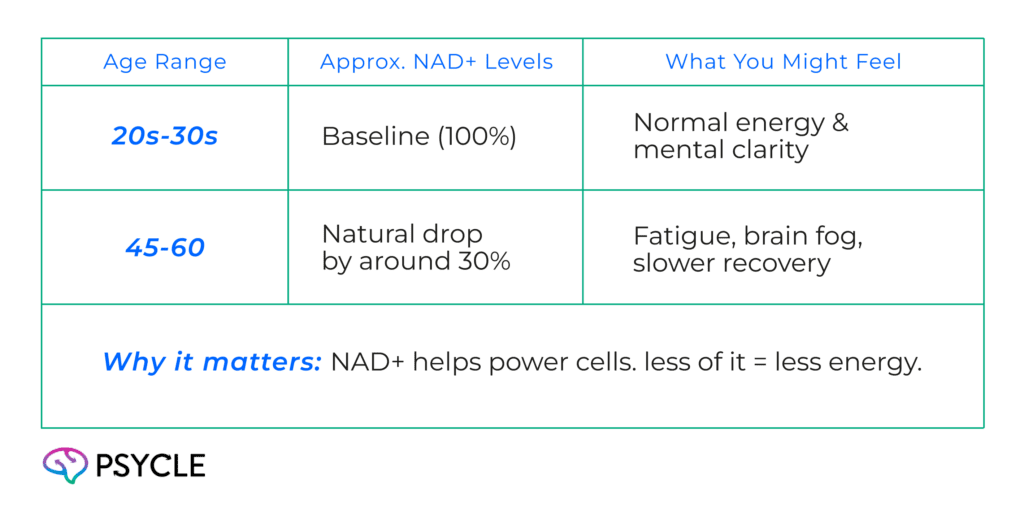
NAD+ levels decrease as we get older, with some research indicating a decline of around 30% between the ages of 45 and 60. This drop is believed to contribute to common signs of ageing, such as lower energy levels and reduced mental sharpness.
As a result, many people are now turning to NAD+ supplements to support their overall health and possibly slow the ageing process. People don’t typically supplement NAD+ directly because it’s not easily absorbed through the digestive system.
Instead, they often take precursors, molecules that the body can convert into NAD+. Two of the most popular are nicotinamide riboside (NR) and nicotinamide mononucleotide (NMN). These are usually taken in capsule form.
For a more intensive approach, individuals can also opt for NAD+ IV therapy, in which NAD+ is administered directly into the bloodstream. This method bypasses the gut entirely, meaning cells are rapidly saturated with the molecule.
Although it’s been studied for years, NAD+ has only recently gained mainstream attention. Celebrities and influencers are now publicly sharing their NAD+ supplement routines and praising its benefits, such as increased energy and focus. As interest grows, more NAD+ products are entering the market, and clinics offering NAD+ IV therapy are popping up to meet the demand.
Why Are Celebrities Taking NAD+?
While each celebrity may have their own reasons, there are common themes behind the trend — all linked to performance, appearance, and longevity.
Energy and Recovery
NAD+ plays a key role in converting food into energy at a cellular level. Higher NAD+ levels may support better mitochondrial function, which can improve energy production and recovery after physical or mental stress. For athletes and performers with demanding schedules, this could mean faster recovery and more consistent performance.
Anti-Aging and Skin Health
The association between NAD+ and anti-aging has made it particularly appealing in the beauty world. Research has linked declining NAD+ levels to cellular aging, which can influence skin health, elasticity, and appearance. Many celebrities credit NAD+ supplementation for sustained vitality and a more youthful look.
Cognitive Function
NAD+ is linked to improved focus, memory, and mental clarity. For public figures managing high-pressure careers, long work hours, and constant decision-making, sharpened cognitive performance is a significant draw.
Immune and Stress Support
Frequent travel, high stress, and exposure to different environments can affect immune health and energy balance. NAD+ is thought to support resilience by helping cells repair damage and regulate inflammation, making it an attractive option for people whose lifestyles involve demanding schedules and constant travel.
What Celebrities Take NAD+? A Closer Look
From A-list actors and wellness entrepreneurs to podcasters and professional athletes, a growing number of celebrities are incorporating NAD+ into their health routines. Below, we take a closer look at the most notable names, what they’ve said publicly about NAD+ therapy, and how they use it.
Jennifer Aniston’s Praise of Weekly NAD+ IVs
One of these celebrities is Jennifer Aniston, most famous for her role as Rachel on the hit sitcom Friends. Aniston is often praised for looking years younger than her biological age of 56, with fans attributing this to a combination of her cosmetics and lifestyle choices.
However, in an interview with The Wall Street Journal, she suggested that NAD+ could also be helping. She reported receiving NAD+ IV drips every week and called the treatment “the future” of health and beauty.
Joe Rogan on NAD+ for Energy and Recovery
Podcaster and comedian Joe Rogan has discussed his use of NAD+ therapy multiple times on his show. He says it helps him improve his mental clarity during long workdays, aids in workout recovery, enhances stamina for martial arts training, and supports overall health. In his episode with Sebastian Maniscalco, Rogan said:
“There’s a benefit for your immune system, there’s a benefit cognitively. You feel much better.”
Rogan has also endorsed other forms of IV therapy, including infusions of vitamin C and zinc.
Hailey Bieber and Kendall Jenner Use NAD+ on the Kardashians
NAD+ therapy gained prime-time fame in a 2022 episode of Keeping Up with the Kardashians. The episode showed models and public figures Kendall Jenner and Hailey Bieber undergoing IV NAD+ therapy at a clinic. During her injection, Bieber said, “I’m going to NAD+ for the rest of my life and I’m never going to age.”
It’s important to note that celebrity mentions are not medical endorsements — they reflect personal interest and access, not proof of effectiveness.
Hailey’s husband, Justin Bieber, also reports using regular IV NAD+ drips as part of his wellness routine. After going sober, Bieber got diagnosed with anxiety, chronic mononucleosis, and Lyme disease. He uses NAD+ to manage his psychological symptoms and chronic fatigue, and showed a clip of him having IV therapy on his documentary series, Seasons.
Gwyneth Paltrow’s Anti-Aging NAD+ Ritual
Gwyneth Paltrow is well-known for exploring alternative wellness therapies. She told Harper’s Bazaar she gets NAD+ IV drips every few months as an anti-aging boost. She described them as a “beauty from the inside out” kind of cosmetic therapy.
Like many others, Paltrow has also used NAD+ to combat symptoms of long COVID. She thinks they’re useful for any infections that can give rise to long-term problems.
“I think they’re really helpful if you have a good doctor prescribing what’s in it, and a good nurse to kind of jab you with it. But, it’s one of the ways I typically get through flu season, and especially with long-term inflammatory stuff—I’ve had some long COVID symptoms and mold exposure in the past, so I find IVs incredibly helpful for anything chronic.”
Shannon Sharpe on NAD+ for Athletic Longevity
NFL Hall of Famer Shannon Sharpe, known for his dedication to fitness and longevity well into his 50s, has incorporated NAD+ precursors into his wellness regimen. Sharpe’s use of NAD+ signals the growing appeal of this therapy beyond Hollywood, extending into the world of professional athletics.
His focus is on maintaining physical performance, recovery, and overall vitality as he ages — goals that align with the core promise of NAD+ supplementation. Sharpe’s endorsement is particularly notable because it represents a shift: NAD+ is no longer just a beauty and anti-aging trend, but a tool that elite athletes are using to support peak performance and healthy aging.
Is NAD+ Therapy Worth the Celebrity Hype?
NAD+ therapy has captured public interest, thanks to endorsements by high-profile figures. But does it deliver?
Early research on NAD+ shows promising potential. Increasing NAD+ levels appears to support mitochondrial function, reduce inflammation, and enhance DNA repair—key processes involved in aging. In animal studies, NAD+ supplementation has been linked to increased lifespan and a reduction in biological markers associated with Alzheimer’s disease.
However, evidence in humans remains very limited. A small number of clinical studies suggest that NAD+ may:
- Decrease LDL cholesterol, commonly known as “bad fats,” linked to heart disease
- Improve physical work capacity
- Reduce fatigue
- Enhance cognitive function in patients with cognitive decline
At this stage, the overall safety and effectiveness of using NAD+ to reverse aging is not yet fully understood. Ongoing clinical studies aim to provide more definitive answers.
How to Boost NAD+ Naturally
While celebrity-grade IV drips and supplements get most of the attention, there are everyday strategies that can support your body’s NAD+ production.
Eating foods rich in vitamin B3 (niacin) provides the building blocks your body needs to produce NAD+. Good sources include turkey, chicken, mushrooms, tuna, peanuts, and fortified cereals. Incorporating these into your regular diet is one of the simplest ways to support NAD+ levels.
Regular exercise is another effective approach. Physical activity stimulates mitochondrial function and may naturally boost NAD+ levels. High-intensity interval training (HIIT) and strength training are particularly effective at supporting cellular energy production.
Getting quality sleep and managing stress also play important roles in maintaining cellular health. Chronic stress and sleep deprivation can accelerate NAD+ decline, so prioritizing rest and recovery supports the same biological processes that NAD+ therapy aims to enhance.
These lifestyle approaches can complement NAD+ supplementation or IV therapy, or serve as a starting point for anyone interested in the benefits of NAD+ without the clinic price tag.
FAQs
How Can I Naturally Increase My NAD+ Levels?
You can support NAD+ production through several lifestyle strategies. Eating foods rich in vitamin B3 (niacin) — such as turkey, chicken, mushrooms, and tuna — provides the building blocks your body needs. Regular exercise, particularly high-intensity interval training (HIIT) and strength training, stimulates mitochondrial function and may boost NAD+ levels. Getting quality sleep and managing stress also play important roles in maintaining cellular health. These approaches can complement NAD+ supplementation or IV therapy.
Is NAD+ Safe?
NAD+ is generally considered safe when used appropriately. Most people who use NAD report few to no side effects, and those that do occur are typically mild. These may include nausea, fatigue, headache, flushing, or light-headedness, particularly during intravenous infusions if administered too quickly. However, while short-term use appears to be well-tolerated, the long-term safety of NAD+ supplementation is not yet fully understood.
Is IV NAD+ Better Than NAD+ Patches?
IV NAD+ therapy delivers a high concentration of NAD+⁺ directly into the bloodstream, leading to faster and more pronounced effects. However, it requires professional administration, is time-intensive, and can be costly. NAD+ patches provide a more convenient and non-invasive option. They’re self-applied and typically worn for several hours.
Sources
- Zhou, C.C., et al. (2016). Hepatic NAD+ deficiency as a therapeutic target for non-alcoholic fatty liver disease in ageing. British Journal of Pharmacology, 173(15), 2352–2368. https://pmc.ncbi.nlm.nih.gov/articles/PMC4945761/
- Mouchiroud, L., Houtkooper, R.H., et al. (2013). The NAD+/Sirtuin Pathway Modulates Longevity through Activation of Mitochondrial UPR and FOXO Signaling. Cell, 154(2), 430–441. https://pmc.ncbi.nlm.nih.gov/articles/PMC3753670/
- Zhong, O., Wang, J., Tan, Y., Lei, X., & Tang, Z. (2022). Effects of NAD+ precursor supplementation on glucose and lipid metabolism in humans: a meta-analysis. Nutrition & Metabolism, 19(1), 20. https://pubmed.ncbi.nlm.nih.gov/35303905/
- Mach, J., Midgley, A.W., Dank, S., Grant, R.S., & Bentley, D.J. (2010). The Effect of Antioxidant Supplementation on Fatigue during Exercise: Potential Role for NAD+(H). Nutrients, 2(3), 319–329. https://pmc.ncbi.nlm.nih.gov/articles/PMC3257644/
- de Mello Gindri, I., Ferrari, G., Pinto, L.P.S., et al. (2024). Evaluation of safety and effectiveness of NAD in different clinical conditions: a systematic review. American Journal of Physiology-Endocrinology and Metabolism, 326, E417–E427. https://pubmed.ncbi.nlm.nih.gov/37971292/
- Merry, S. (2023). Jennifer Aniston on The Morning Show, Wellness and What’s Next. The Wall Street Journal. https://www.wsj.com/articles/jennifer-aniston-morning-show-season-3-59413d2f
- Paltrow, G. (2023). Interview on Skincare and Wellness Routines. Harper’s Bazaar. https://www.harpersbazaar.com/beauty/skin-care/a43339172/gwyneth-paltrow-goop-vita-c-eye-cream-interview/
- Hailey Bieber and Kendall Jenner NAD+ IV Scene. Keeping Up with the Kardashians (2022). https://www.youtube.com/watch?v=Fdt-AaxfI8Y
- Justin Bieber: Seasons — Documentary Series (2020). YouTube. https://www.youtube.com/watch?v=Uz2-nYKCFIo
- Joe Rogan Experience — Episode with Sebastian Maniscalco. YouTube. https://www.youtube.com/watch?v=PC9svktwGng
- Joe Rogan on IV Therapy. YouTube. https://www.youtube.com/watch?v=vIroVHH2IIA&t=2s
- Skahill, G. (2024). Everything You Need to Know About NAD+. Elle. https://www.elle.com/beauty/health-fitness/a64299674/everything-you-need-to-know-nad-explained/