


Transcranial Magnetic Stimulation (TMS) is an innovative treatment for people with mental health disorders and certain neurological conditions. It’s a non-drug option and works differently from standard medications.
In this article, we’ll explain the different types of TMS and what to expect during treatment, including how long each session lasts.
Key Takeaways
- TMS is a non-invasive treatment that helps stimulate underactive brain areas.
- Different types of TMS include rTMS, dTMS, and Theta Burst Stimulation.
- A TMS session typically lasts between 10 and 40 minutes, depending on the type.
- Most people require 20 to 30 sessions to see benefits from TMS treatment.
Understanding TMS
What is TMS?
Transcranial Magnetic Stimulation (TMS) is a medical procedure that uses magnetic fields to stimulate electrical activity in certain parts of the brain. The goal is to improve brain function, particularly in areas that aren’t working as they should. For example, in people with depression, TMS targets the dorsolateral prefrontal cortex (DLPFC). This region plays a key role in mood regulation and is often less active in the brains of those with depression.
TMS is a non-invasive procedure, meaning it doesn’t involve any surgery or anesthesia, unlike other brain stimulation therapies.
Who Can Benefit from TMS?
TMS can help a variety of people, particularly those who have not found relief from traditional treatments like medication or therapy. Conditions that may benefit from TMS include:
- Major Depressive Disorder: Many people with depression experience significant improvements after TMS, including those who don’t respond to standard antidepressant medications
- Anxiety Disorders: TMS may help reduce symptoms of anxiety
- Obsessive-Compulsive Disorder (OCD): TMS may help in managing OCD symptoms
- Neurological conditions: Studies suggest TMS can help improve symptoms of neurodegenerative disorders like Parkinson’s and Alzheimer’s disease
Types of TMS
There are several types of TMS, each with its unique methods and applications:
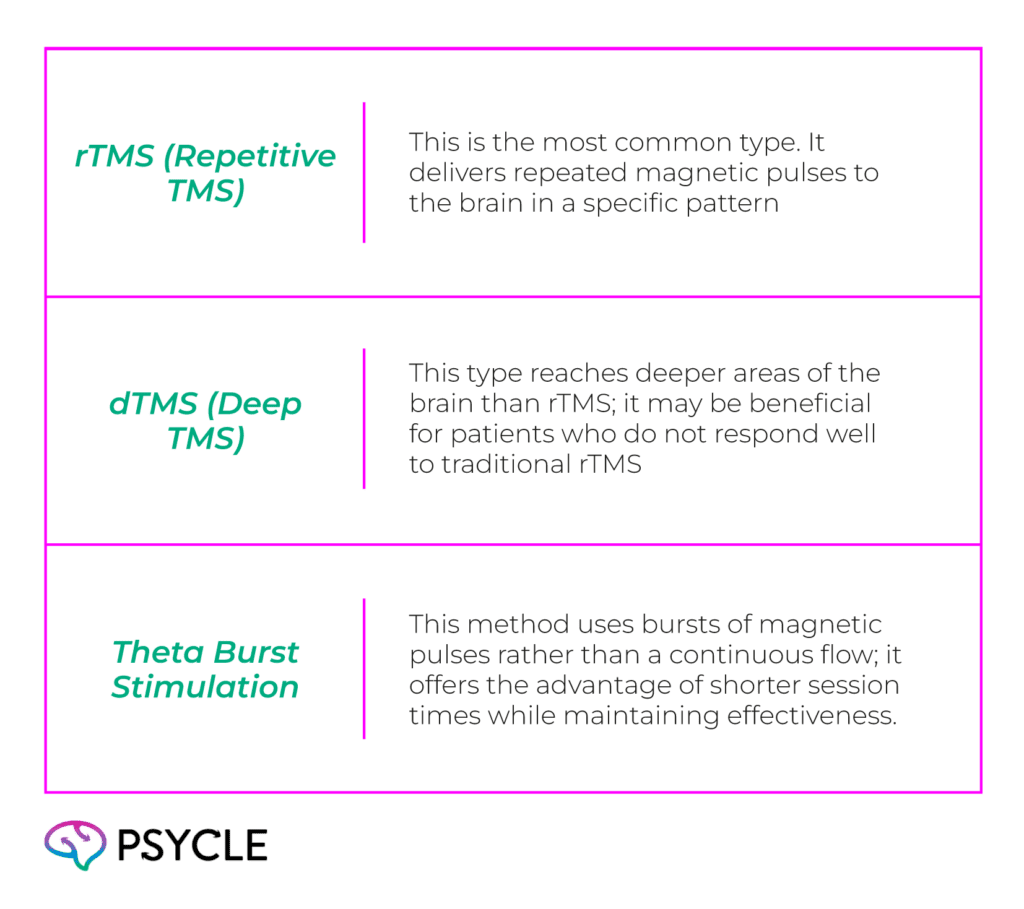
Each type of TMS may have different setups, which can affect how long the session lasts.
What to Expect During a TMS Session
Session Breakdown
When you arrive for a TMS session, here is what typically happens:
- Preparation: You sit in a comfortable chair in a quiet room. A technician will position the TMS device near your head and adjust it for comfort; you may wear earplugs to reduce noise from the machine.
- Stimulation: The technician will start the machine, which delivers magnetic pulses to your brain
- Monitoring: During the session, the technician monitors your comfort level and adjusts the machine as needed
- Post-Session Care: After the session, you can return to your regular activities immediately; There is no downtime, which makes TMS convenient for many people
Patient Experience
TMS is generally not painful. Most patients describe the sensation as a light tapping or clicking on the head. Side effects can include headaches, temporary changes in hearing, and scalp discomfort, but they are generally mild and resolve after the procedure.
If at any point you feel uncomfortable, you can communicate with the technician, who can adjust the settings to improve your experience.
How Long Does a TMS Session Last?
Duration of Each TMS Type
Each type of TMS has a specific duration:
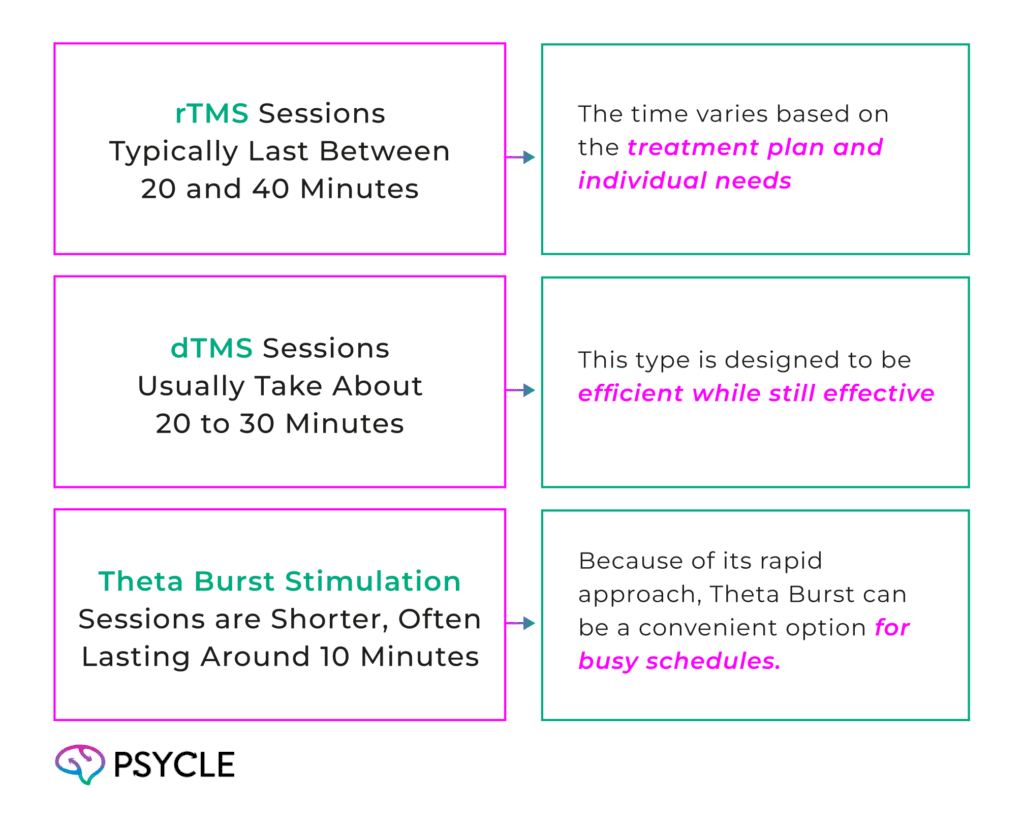
The exact time for your session may change based on your specific needs and the recommendations from your healthcare provider.
How Long Does It Take for TMS to Work?
Most people need multiple TMS sessions to notice benefits. A typical treatment course consists of 20 to 30 sessions over several weeks. Each session usually occurs five days a week, making it a structured treatment plan.
Many patients begin to feel improvements in their symptoms after a few weeks of consistent treatment. While some may notice changes after just a handful of sessions, others might need the full course to experience significant benefits. It’s essential to maintain open communication with your healthcare provider throughout this process to track your progress.
FAQs
Does the Length of a TMS Session Depend on the Condition Being Treated?
Different conditions may require different types of TMS protocols, which have different lengths. For instance, dTBS generally lasts longer than a standard rTMS session. Studies also show that more severe conditions typically require more TMS sessions.
What is the Long-Term Safety of TMS?
Research supports the long-term safety of TMS. Serious side effects have included hearing loss, seizures, and the onset of mania, but these are extremely rare and typically short-lasting.
Sources