

Spravato is an innovative treatment for depression based on ketamine. It has a unique mechanism of action in the brain compared with conventional antidepressants and can provide relief when standard therapies don’t work.
In this article, we’ll explore how Spravato works, looking at both the neurological effects and what to expect during treatment.
Key Takeaways
- Spravato is a nasal spray used for treatment-resistant depression and depression with suicidal thoughts or actions
- Spravato blocks NMDA receptors and increases glutamate signaling
- Through BDNF, Spravato supports neuroplasticity, helping restore brain activity in damaged circuits
- Spravato increases FC in the brain
- Spravato increases activity in brain regions associated with depression, including the PFC and hippocampus
- Treatment sessions include dosing, monitoring, and resting under supervision for about two hours.
What Is Spravato?
Spravato is the brand name for esketamine, a form of ketamine that comes in a nasal spray. Ketamine is made up of two mirror-image molecules called enantiomers. Spravato consists of the S-enantiomer of ketamine, which interacts more strongly with NMDA receptors than the other enantiomer. NMDA receptors are thought to play a key role in ketamine’s antidepressant effects.
Unlike ketamine, Spravato is FDA-approved as a mental health treatment. The FDA approves Spravato for two main uses:
- Treatment-resistant depression (TRD) – when someone has no clear benefit in symptoms despite trying two different antidepressant types for at least six weeks
- Major depressive disorder with suicidal thoughts or actions (MDSI) – diagnosed by a doctor
Doctors can only give Spravato in certified clinics, and it must be taken under medical supervision. Patients are required to take an oral antidepressant at the same time, as Spravato does not replace regular depression medicine but adds support when other treatments do not give enough relief.
How Does Spravato Work in the Brain?
Spravato works by affecting a brain protein called the NMDA receptor. This receptor responds typically to glutamate, a chemical messenger that helps nerve cells communicate and supports learning and memory.
By blocking NMDA receptors, Spravato changes how glutamate signals move through the brain, setting off several downstream effects. In certain brain areas, it blocks NMDA receptors on inhibitory neurons. This actually increases glutamate signalling and activity in that region, rather than decreasing it.
Neuroplasticity
Neuroplasticity refers to the brain’s ability to grow, repair itself, and adapt.
By blocking NMDA receptors on inhibitory interneurons, Spravato boosts the release of glutamate. This glutamate then activates another protein called AMPA receptors, which leads to increased production of BDNF (brain-derived neurotrophic factor). BDNF is a growth factor that supports the development of new brain cells and strengthens the connections between them.
Through BDNF, Spravato may help restore healthy activity in brain regions affected by chronic stress. For example, one mouse study showed that stress during pregnancy led to behaviours resembling postpartum depression. Treatment with esketamine reversed these behaviours and increased BDNF signalling in the brain.
By promoting new neural connections, Spravato may also help people form new brain pathways. This could help them more easily form new habits and patterns of thinking.
Functional Connectivity
Functional connectivity (FC) is the way different parts of your brain talk to each other. In depression, people often show disrupted FC between regions of the brain associated with memory, stress and emotional regulation. This disruption may play a key role in depressive symptoms.
Studies show that ketamine (and therefore likely Spravato) alters FC in the brains of patients with depression. This effect could help normalise signalling across different brain regions.
Increased Brain Activity
Research shows that ketamine-based treatments, including Spravato, can increase activity in brain regions linked to depression—likely through elevated glutamate signalling. Two key affected areas are:
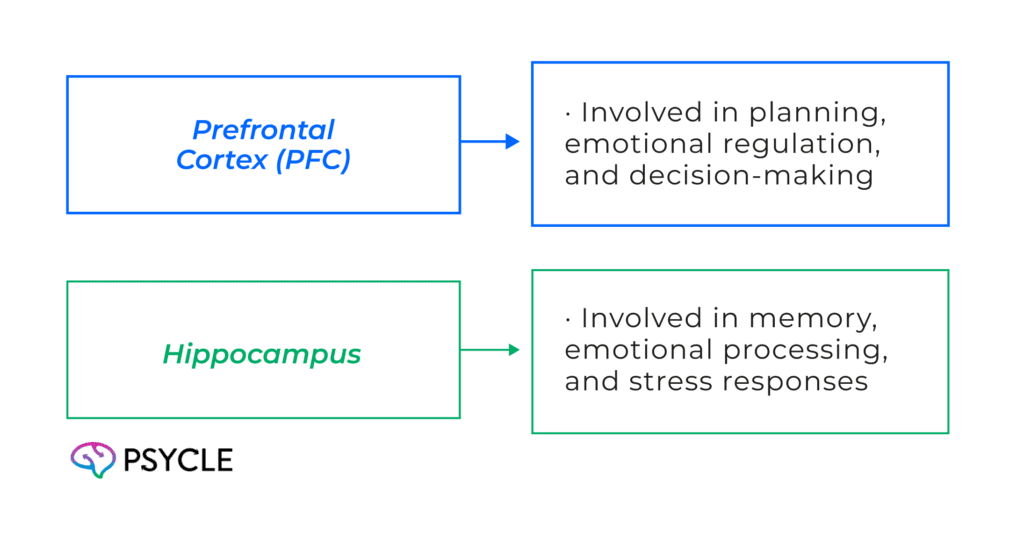
This rapid boost in activity may explain why some people feel relief shortly after using Spravato. Over time, chemical changes can also lead to more lasting increases in activity. For instance, one study found that people who used Spravato showed increased volume in the PFC and hippocampus six months later, suggesting long-term improvements in these regions.
How Spravato Treatment Works
Spravato treatment follows a structured plan. Clinics follow strict steps to keep you safe and help you get the best results. Here is what you can expect from start to finish.
Before Treatment
You meet with a doctor or mental health provider to review your history. The provider checks which medications you tried, how long you took them, and how you responded. They also review medical conditions such as blood pressure, heart problems, or any history of substance misuse.
If Spravato is a good fit for you, the provider will explain how the nasal spray works, how often you come in, and how long each visit lasts.
During Treatment Sessions
A session usually lasts about two hours. Here is the step-by-step experience:
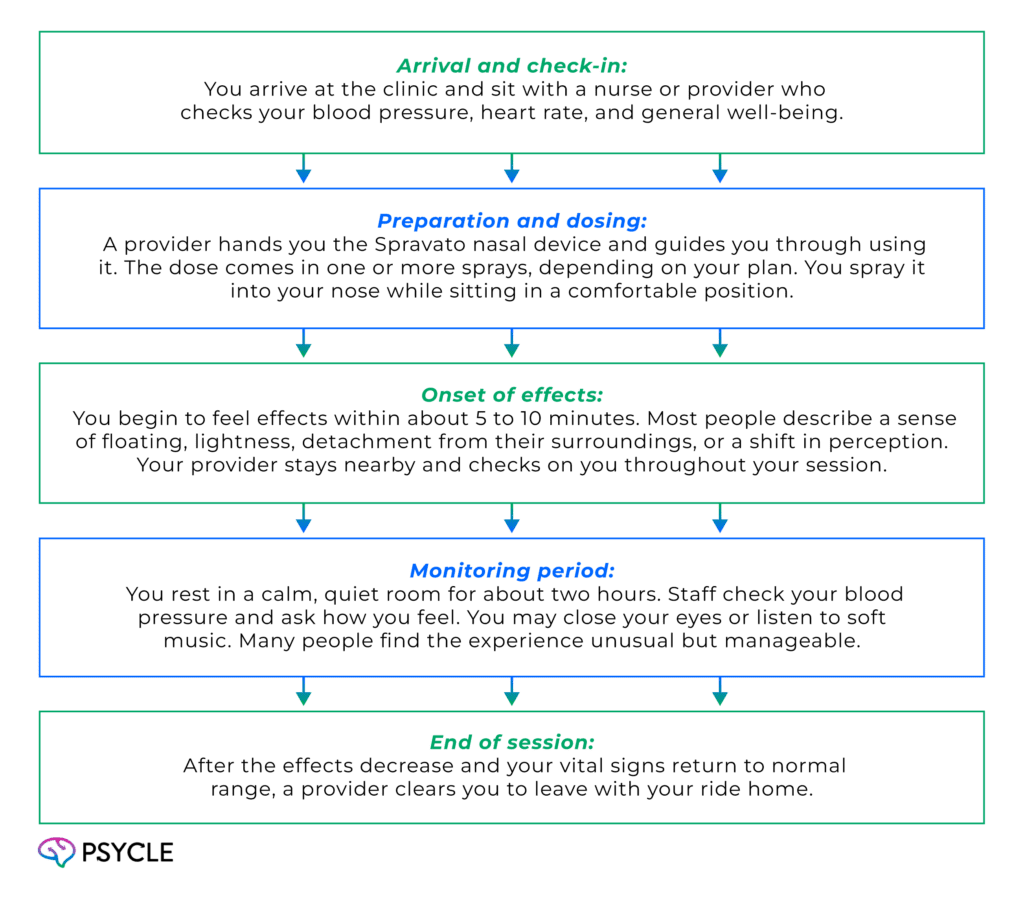
You do not drive, work heavy machinery, or make important decisions the rest of the day because your thinking may feel slower or foggy.
Induction Phase
Most people attend two sessions per week for the first four weeks. This period is called the induction phase. Many people begin to feel improvement during this phase, but the timeline varies.
Many clinics also encourage therapy during this time. The neuroplastic effects of Spravato are thought to help make therapy more effective.
Maintenance Phase
After the first four weeks, you move to once-a-week treatments. Later, many people shift to treatments every one to two weeks. The maintenance schedule depends on how you respond, how stable your mood stays, and what your provider recommends.
Some people continue long-term treatments, while others taper down as their symptoms stay stable.
Safety of Spravato
While Spravato’s action on NMDA receptors can be helpful, it may also cause side effects. A common one is dissociation, where you might feel detached from yourself, your surroundings, or the passage of time. For some, this sensation can be pleasant, but it can also be confusing, disorienting, or distressing.
Spravato can also affect the cardiovascular system, temporarily raising blood pressure and heart rate. Other possible side effects include headaches, nausea, dizziness, and nasal irritation.
Because of these risks, Spravato isn’t suitable for everyone. A healthcare provider will assess your medical history and current conditions to determine whether this treatment is safe for you.
FAQs
What is Neuroplasticity and Why is it Important in Depression?
Neuroplasticity is the brain’s ability to change, grow, and form new connections throughout life. It allows the brain to adapt, learn, and recover from stress or injury.
In depression, neuroplasticity often decreases—certain brain networks become rigid, making it harder to shift out of negative thinking patterns, regulate emotions, or experience motivation and pleasure.
Treatments that support neuroplasticity may help the brain rebuild damaged pathways. This can improve mood, cognition, and emotional flexibility over time.
What are the Psychological Effects of Spravato
People may experience a range of psychological effects during or shortly after a session, which can include:
- Dissociation – a sense of detachment from thoughts, surroundings, or one’s body
- Perceptual changes – altered sense of time, space, or visual/auditory distortions
- Shifts in mood – this can include calmness, relief, emotional release, or occasionally anxiety
- Changes in thinking – thoughts may feel faster, slower, or more dream-like
- Altered self-reflection – some people describe new perspectives on problems or emotions
These effects are temporary and monitored by healthcare professionals during treatment sessions. Many patients report that these experiences, combined with the medication’s biological action, contribute to improved mood after treatment.
Sources
- https://psyclehealth.com/spravato/
- https://www.spravato.com/
- https://pmc.ncbi.nlm.nih.gov/articles/PMC9922941/