
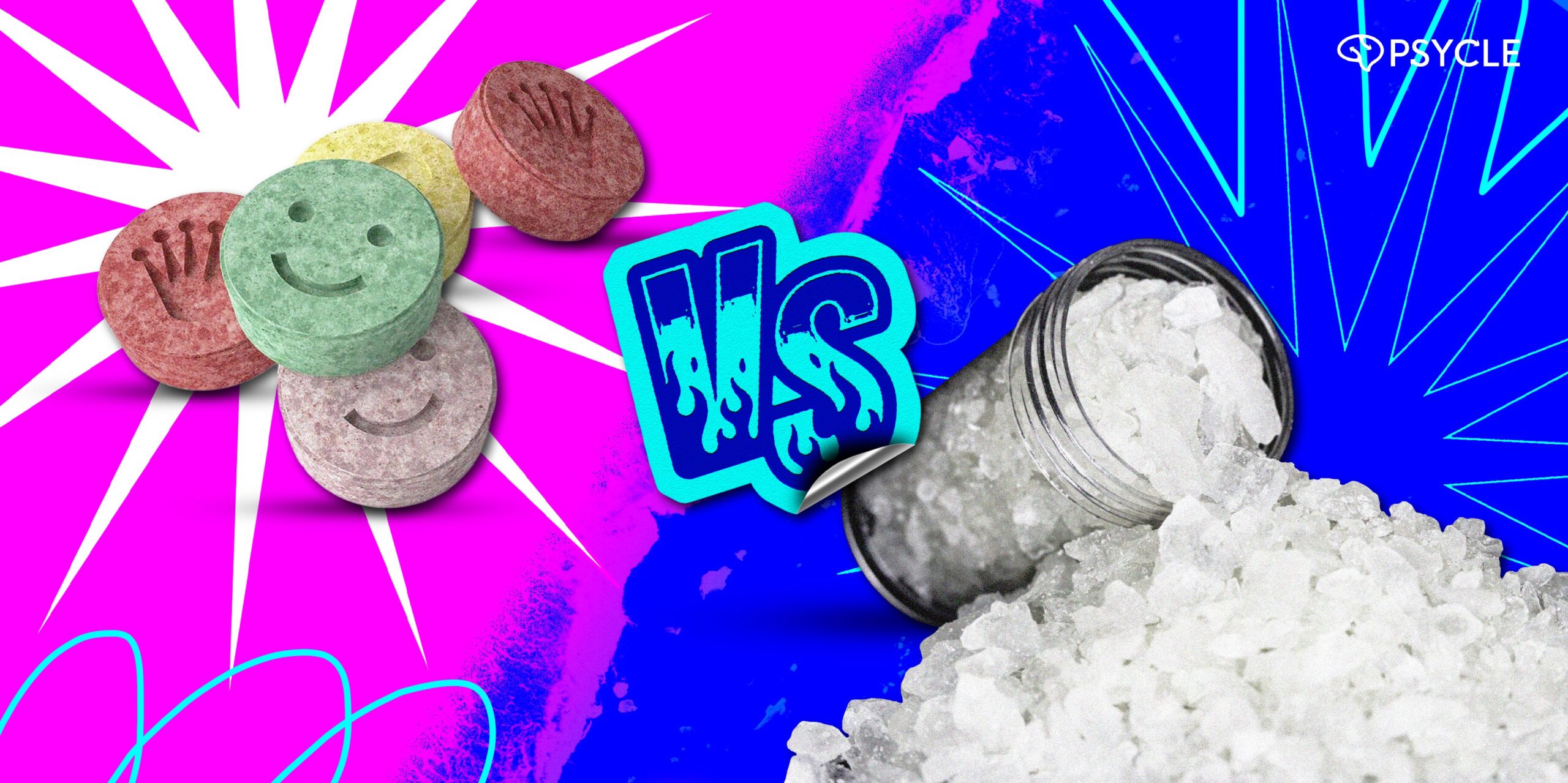

You’ve probably heard MDMA referred to as “molly” or “ecstasy”. But are they the same thing? Both names point to the same drug, though “molly” is more commonly linked to its use in party and club settings.
In this article, we’ll break down MDMA vs. Molly, explore its effects and risks, and share important tips on staying safe.
Key Takeaways
- MDMA, Molly, and Ecstasy all refer to the same core drug, but in different forms.
- MDMA is the lab-made substance, Molly is often sold as crystals or powder, and Ecstasy usually comes as colorful pills.
- People often believe Molly is purer than Ecstasy, but both can be mixed with other harmful drugs.
- Risks include overheating, dehydration, overhydration, confusion, and long-term brain effects.
- Mixing MDMA with alcohol or other drugs raises the danger.
- Testing substances, staying cool, and drinking water slowly can lower risks, but no use is completely safe.
What is MDMA?
MDMA stands for 3,4-methylenedioxymethamphetamine. It is a synthetic drug that evokes feelings of bliss, increased energy, and a sense of connectedness to others.
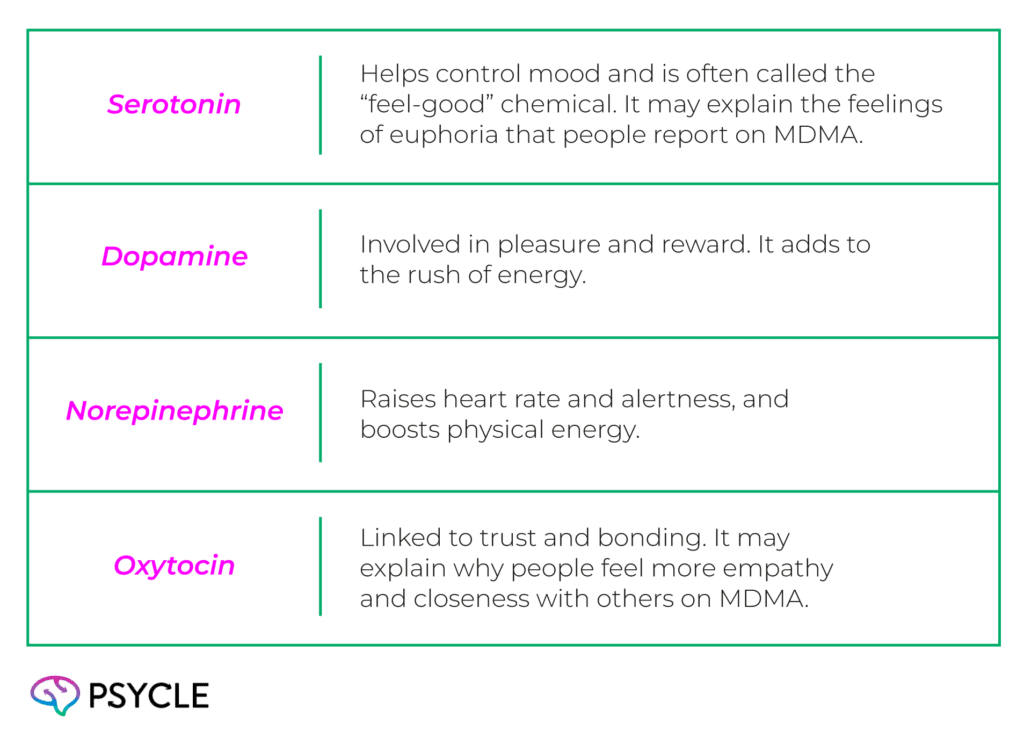
MDMA works by increasing the availability of chemical messengers in the brain, including:
History of MDMA
MDMA was first created in 1912 by the German drug company Merck and initially researched by the US government for chemical warfare. In the 1970s, psychiatrists began giving MDMA to patients during therapy. They noticed that people opened up more, shared feelings, and felt safe during hard conversations.
By the 1980s, MDMA started moving into clubs and raves. People liked how it made them feel connected and full of energy on the dance floor. This led to the US government banning MDMA in 1985. It remains a Schedule I drug, meaning it has no medical use and a high risk for abuse.
Even after being banned, researchers have stayed curious about its therapeutic use. In the past decade, multiple studies have shown that MDMA can be highly effective for helping people with mental health conditions, particularly post-traumatic stress disorder (PTSD).
While MDMA therapy is still illegal in the US, other countries have made exceptions in recent years.
What is Molly?
Molly is a nickname for the crystalline or powdered form of MDMA. It’s associated with the party scene, as opposed to when MDMA is used in therapy.
People say Molly comes from the word “molecular,” because it is thought to be a purer form of MDMA compared with ecstasy pills. However, this isn’t necessarily the case as dealers may mix Molly with other substances. Sometimes, what you buy as Molly doesn’t contain MDMA at all.
Molly usually looks like white or brown crystals or powder, which often come in a small clear bag. People take it in different ways:
- Put it into a capsule and swallow it
- Wrap it in paper and swallow it (“bombing”)
- Snort it
What is Ecstasy?
Ecstasy is the name people use when MDMA comes in pill form. Pills often look colorful, stamped with logos or shapes. Some look fun, like cartoon characters or brand logos. But those designs don’t guarantee safety.
Ecstasy tablets typically contain MDMA and other substances that also increase energy. In some cases, ecstasy doesn’t even contain MDMA at all.
According to a DEA report, the most common additional drugs found in ecstasy are:
- Caffeine
- Methamphetamine
- Ketamine
- Cathiones, or “bath salts”
- Cocaine
Because pills often mix drugs, they are unpredictable. Two pills that look the same may have very different effects.
Safety of MDMA vs Molly
Short-Term Risks
- Overheating: MDMA raises body temperature, which can increase the risk of overheating when dancing in clubs.
- Water retention: MDMA causes the kidneys to absorb more water, making it difficult to urinate.
- Hyponatremia: MDMA can make you thirstier. By drinking excessive water, while unable to urinate, your blood can become too dilute, which is called hyponatremia. In severe cases, this can cause swelling of the brain, seizures, confusion, coma, and even death.
- Increased heart rate and blood pressure: This makes MDMA dangerous for people with heart problems.
- Difficulty sleeping
- Coming down: MDMA is associated with a “come-down,” where people feel tired, sad, and irritable in the days following their experience.
Long-Term Risks
- Memory problems: Some studies link heavy MDMA use to trouble with memory and thinking.
- Brain changes: Animal studies show MDMA may damage serotonin neurons, though scientists debate how much this happens in people.
Clinical vs. Party Settings
In MDMA therapy, the drug is far less risky than when used recreationally. Lower, controlled doses reduce side effects, and patients are closely monitored for safety throughout the session. It’s also typically given earlier in the day, which helps avoid disrupting sleep.
Adulturated Drugs
Molly and Ecstasy come with extra dangers because you rarely know their purity. They may be contaminated with other drugs or even be other drugs mislabeled as Molly. For instance, drug checking services at UK festivals found that what lots of people thought was MDMA was in fact a designer drug, 4-CMC.
Drug Interactions
At parties, people sometimes mix MDMA with alcohol or other drugs, which can be dangerous. Some prescription medications can also raise the risks.
In particular, drugs that increase serotonin are especially unsafe to combine with MDMA. Too much serotonin in the body can cause a dangerously high heart rate and blood pressure, and in severe cases may lead to seizures or even death.
Tips for Staying Safe with Molly
The safest choice is not to take MDMA at all. But if you do, harm-reduction steps lower your risk:
- Test what you have: Reagent test kits can show if MDMA is present or if it’s a different drug.
- Take a small dose first: Start with less and wait to feel the effect before thinking about more.
Stay hydrated, but not too much: Drink water slowly over time. About half a liter per hour is enough if you are active. - Take breaks from dancing: Cool down in a quiet space to avoid overheating.
- Don’t mix drugs: Avoid combining MDMA with alcohol, stimulants, or prescription drugs.
- Have a sober friend: Someone should stay aware to help if things go wrong.
Remember, these tips reduce risks but do not make MDMA safe.
FAQs
Is MDMA Legal?
No. MDMA is illegal in most countries. It is listed as a Schedule I drug in the United States, which means the government sees it as having a high potential for abuse and no accepted medical use. However, scientists are studying MDMA in clinical trials for therapy, especially for PTSD. In Australia, psychiatrists can already use it in therapy under strict medical guidelines.
How Long Does MDMA Stay in Your Body?
The effects usually last 3 to 6 hours. But MDMA can stay in your system longer. Urine tests can detect it for up to 3 days, and hair tests may show use for months.